The Arctic
The Arctic is a northern expedition map in the Definitive Edition map pool associated with The Baltic Powers. It can place Inuit, Sámi and Tengri settlements, as well as Qivittoq and Harpooner outlaws. These neutral choices create several possible investments, while generated resource and route positions make the safest opening different in each match.
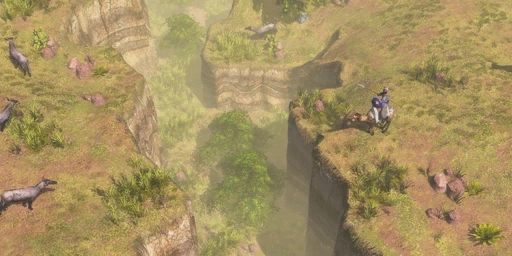
Map character
Use the Explorer to reveal nearby Hunts, Mines, Trade Route sites and all three possible settlement areas before committing to a distant Trading Post. Compare an alliance with outlaw recruitment and the army you plan to field. The map name does not guarantee a fixed resource path or which neutral site appears closest.
What to scout
Secure the nearest safe resources first, then expand toward a neutral site that can be defended. Keep a mobile force near any distant Trading Post and return to scouting when the first plan meets the actual terrain.
Practical direction
The map has three neutral settlement options and two outlaw types. Choose among them based on what spawned, how far it is from the base and whether the army can hold the approach.
Choose between alliances and outlaw recruitment
Inuit, Sámi and Tengri settlements are possible alliance sites; Qivittoq and Harpooner are the listed outlaw options. They represent different ways to spend early resources: a Trading Post can secure an alliance’s unit and technology choices, while an outlaw camp can add a recruitable unit where the civilization permits it. Reveal the choices and compare them with the army’s missing role instead of claiming the first site automatically. A distant settlement needs enough defenders to preserve the Trading Post after it is built.
Read the generated resource routes
The Arctic does not provide one dependable fixed opening. Locate Food and Coin near the Town Center, note where Wood can be gathered safely and check whether a Trade Route or water access matters in this generation. A site that looks close on the minimap may require a long, exposed walk. Keep Villagers within support while the Explorer checks the path, then place economic buildings or production where they can reinforce the expansion.
Expand in stages through the northern terrain
The map is framed as a northern expedition, so the practical plan is to prepare resources, secure a nearby position and only then extend toward a contested settlement. Keep vision ahead of forward builders and avoid spreading the army among several neutral objectives at once. If the opponent claims one settlement first, compare the remaining sites and outlaw options rather than repeating the original route. Reassess after the opening because generated approaches may make one side much easier to hold.
Match the settlement choice to the army’s missing role
The Inuit and Sámi settlements offer different kinds of value among the map’s alliance sites. In The Baltic Powers, an Inuit Hunter is a Commerce Age ranged infantry unit that costs 60 Food and 50 Wood, trains in 30 seconds and has 130 hit points with 20% ranged resistance. Its attack bonuses target Pets, Mercenaries, Outlaws and Native warriors, which can make it useful against some neutral forces encountered on the map. A Sámi Noaidi costs 50 Food and 100 Coin, takes 35 seconds to train and has 240 hit points with 30% ranged resistance. It can gather, build and claim Treasures, so it contributes to the economy as well as supporting the army. Choose the Inuit option when its combat matchups answer an actual target; choose the Sámi option when the flexible worker role is worth its Coin cost and the exposed site can be supported. Check the Tengri entry for its separate roster rather than treating the three alliances as equivalent.
Compare an outlaw recruit with a settlement investment
Qivittoq and Harpooner outlaws provide another route to neutral units. A Qivittoq costs 90 Wood, trains in 30 seconds, uses 3 population and has 111 hit points with 20% ranged resistance. It moves at 6.0 speed and its attack has strong bonuses against Mercenaries, Native warriors and Pets, with additional bonuses against Cavalry and Shock troops. This makes it a fast specialist option when those target classes matter, while its low hit points mean it should not be sent unsupported into concentrated fire. A settlement Trading Post or Tambo is a larger commitment to an alliance’s roster and technologies; outlaw recruitment is narrower and depends on civilization access. Scout the spawned sites, price the available recruit and compare it with a Noaidi or Hunter before sending builders far from the starting economy.
Include the Noaidi technology in the long-term calculation
If the Sámi plan uses several Noaidi, Sámi Duodji changes the economic value of that alliance. The Exploration Age technology costs 150 Coin, takes 10 seconds to research and adds 0.7 Wood per second for each Sámi Noaidi. Three surviving Noaidi therefore add 2.1 Wood per second, or 126 Wood per minute, before other modifiers. This is passive income rather than faster Villager gathering from trees, and the cost is difficult to justify if the army will contain few Noaidi. Count the units you can realistically train and protect, compare the expected Wood flow with the Coin and research time, and only then make the technology part of the plan.