Axe Rider
Axe Rider is Lakota Heavy cavalry in Age of Empires III, available from the Commerce Age; obtained through Corral, Fort. Its listed ability is Nature Friendship (with the "Morning Star" card).
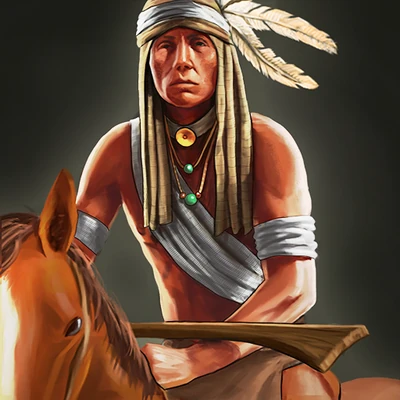
Recorded values
- Available
- Commerce Age · Corral; Fort
- Training
- 40 sec · 2 population · 20 XP per train
- Durability & mobility
- 250 hit points · 20% ranged resistance · 6.75 speed · 12 line of sight
- Siege attack
- 20 base damage · range 6 · attack interval 3.0 · bonus damage: 1.5x vs. Shrine, 16; 0.5x vs. AbstractWall
- Hand attack
- 35 base damage · attack interval 1.5 · bonus damage: 0.75x vs. Light ranged cavalry
- Trample attack
- 18 base damage · attack interval 2.0 · area of effect 3 · bonus damage: Same as hand attack
Role, availability & values
Production is available through Corral or Fort. It has 250 hit points and 20% ranged resistance. It moves at 6.75 speed and uses 2 population. Training costs 150 Food and 50 Coin; it takes 40 seconds to train. Attack profile: Siege attack: 20 damage at range 6; every 3.0 seconds. Hand attack: 35 damage; every 1.5 seconds. Trample attack: 18 damage; every 2.0 seconds; area of effect 3. Special ability or role: Nature Friendship (with the "Morning Star" card).
Matchup & timing
Use the unit’s 6.75-speed movement to choose the approach, threaten an exposed flank, and pull away before anti-cavalry forces can surround it. Look for isolated Villagers, ranged troops, or artillery instead of charging a formed army. Keep a clear retreat route and bring it back to the main army when the opponent protects the economy.
Combat profile and availability
The Axe Rider is Lakota Heavy cavalry introduced in The WarChiefs and trained at a Corral, with Fort production also available in the current Definitive Edition. It is available from the Commerce Age and costs 150 Food and 50 Coin, takes 40 seconds to train, and uses two population. Its profile lists 250 hit points, 20 percent ranged resistance, speed 6.75, and line of sight 12. The hand attack deals 35 damage every 1.5 seconds; its trample attack deals 18 damage over an area of three every two seconds. The Axe Rider's name suggests a conventional axe, but the unit's weapon is a gunstock war club. It is a melee Heavy cavalry unit rather than a ranged rider, so it must close the distance before attacking and can take fire while approaching.
Targets and battlefield role
The Axe Rider is designed to pressure ranged infantry and artillery, with strong base melee damage for a Commerce Age cavalry unit. It can reach Skirmishers and Foot archers protected behind a frontline, and can attack artillery once a safe path opens. Its trample attack helps damage a compact group, but the area hit does not make it safe to charge into a dense formation. The unit has 250 hit points before upgrades, lower than many Heavy cavalry units, so Heavy infantry and ranged cavalry can punish it. Use Axe Riders with Rifle Riders: the ranged riders can engage Musketeers and Pikemen at a distance or occupy the anti-cavalry line, allowing Axe Riders to move around the screen toward the enemy's ranged units or guns. This combined use exploits the units' different roles rather than sending both into the same unfavorable target.
Economy and scaling
Axe Riders cost mostly Food, so sustained production depends on secure hunts and a strong Food economy. Lakota Villagers gather from huntable animals 10 percent more efficiently, which supports the unit's resource demand when the map provides safe herds. Securing hunting grounds and Trading Post sites early helps maintain production while the army contests the center. The 50 Coin cost is lower than the Food cost, but Lakota Coin collection still requires the Tribal Marketplace system in Definitive Edition. The unit scales well with Lakota cavalry cards, technologies, the War Chief's support, Teepees, and ceremonies. Extensive upgrades can increase its hit points and attack substantially; late game records show a fully upgraded Axe Rider reaching 675 hit points and 80 attack under the listed baseline of upgrades. Such a profile requires investment and does not include every possible team bonus or aura, so do not assume it applies automatically.
Positioning and counterplay
Use the Axe Rider's speed to flank, pursue retreating ranged units, or threaten artillery after an enemy screen has moved. Keep it away from concentrated ranged fire while it closes and avoid charging directly through Pikemen or other anti-cavalry infantry. If the opponent fields ranged cavalry, the Axe Rider's hand attack has a small multiplier against that class, but its own lower hit point pool makes an extended fight risky. The unit is also less efficient against Walls, which take reduced damage, and its siege role is limited to a 20 damage attack at range 6. It has a 1.5 multiplier against Shrines, making it a useful target on maps where that structure is important. Choose the target before engaging and leave a retreat path; a cavalry unit that cannot disengage may be lost before its high attack can pay off.
Version and ability notes
The Axe Rider's current cost is 150 Food and 50 Coin; it previously cost 160 Food and 40 Coin before update 13.12327. The Morning Star Home City Card granted Nature Friendship in pre-Definitive Edition versions, allowing the Axe Rider to convert a Treasure guardian after a four second process with a 90 second cooldown. That ability is not available in Definitive Edition. The hand multiplier against Light ranged cavalry also changed over patches, so current matchup notes should use the current 0.75 value rather than an older intermediate value. These edition details matter because a card based conversion trick or older cost can change how a player interprets the unit's role.
Cards, upgrades, and late game
Lakota cavalry benefits from several cards and technologies, so the Axe Rider can remain relevant after its Commerce Age unlock. Invest in hit points and attack when the unit is a central part of the army, and use the available Teepee or ceremony support when it affects the group around the front. Its population efficiency is useful in a large late game force, but upgrades do not remove its vulnerability to ranged fire or anti-cavalry units. A promoted army should still scout for artillery and use Rifle Riders to draw fire or open a path. If the opponent has transitioned to a composition that hard counters Heavy cavalry, spend resources on a different unit line instead of continuing to upgrade Axe Riders simply because the earlier investment was large.
Approach timing
Wait for the opposing anti-cavalry line to move or become occupied before committing Axe Riders. Their attack is strongest once they reach a vulnerable target; sending them in too early lets Pikemen or Heavy infantry meet the charge. Keep them on a flank and enter after allied Rifle Riders have drawn attention.
Lakota heavy Cavalry and building pressure
The Axe Rider is a Commerce Age Lakota heavy Cavalry unit trained at a Corral or Fort. It costs 150 Food and 50 Coin, takes 40 seconds to train and uses two population. It has 250 hit points, 20% ranged resistance, speed 6.75 and sight 12. Its 35-damage hand attack fires every 1.5 seconds, while the 18-damage Trample attack covers an area of three. The 20-damage Siege attack has an increased multiplier against Shrines, making the unit especially useful against that building type. The Morning Star Home City Card grants Nature Friendship, a separate access or ability effect. The Axe Rider combines mobile combat with a way to pressure structures, but its price and population use make it costly to lose.
Use Trample without feeding counters
Axe Riders are strongest when they can engage a compact formation or reach a Shrine after the enemy line has moved. Trample’s area helps against grouped targets, but the ordinary hand attack is less effective against Light ranged Cavalry. Keep the unit away from kiting ranged Cavalry and dedicated anti-Cavalry Infantry, and use Lakota ranged troops to cover those matchups. The Fort offers a protected production point, while the Corral can train the unit from the main base. Include the Food and Coin cost in the next army cycle so the Axe Rider does not prevent production of supporting units. Retreat if the screen breaks; speed 6.75 can preserve the unit for another attack.