Bosniak
Bosniak is Heavy cavalry in Age of Empires III, available from the Fortress Age; obtained through Tavern (Europeans), Monastery (Asians), Saloon (Americans), Palace (Africans), Lombard (Italians). Its listed ability is Combat Promotion.
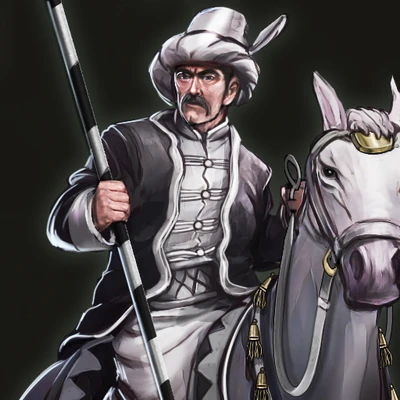
Recorded values
- Cost
- 350 Coin
- Available
- Fortress Age · Tavern (Europeans) ; Monastery (Asians) ; Saloon (Americans) ; Palace (Africans) ; Lombard (Italians)
- Training
- 50 sec · 3 population · 35 XP per train
- Durability & mobility
- 550 hit points · 20% ranged resistance · 6.75 speed · 15 line of sight
- Siege attack
- 45 base damage · range 6 · attack interval 3.0
- Hand attack
- 45 base damage · range 3 · attack interval 1.5 · bonus damage: 1.5x vs. Infantry; 0.67x vs. Heavy infantry
- Trample attack
- 30 base damage · attack interval 2.0 · area of effect 3 · bonus damage: Same as hand attack
- Lance charge (charged)
- 67.5 base damage · range 3 · area of effect 2 · recharge 60
- Ability
- Combat Promotion
Role, availability & values
Production is available through Tavern (Europeans), Monastery (Asians), Saloon (Americans), Palace (Africans), or Lombard (Italians). It has 550 hit points and 20% ranged resistance. It moves at 6.75 speed and uses 3 population. Training costs 350 Coin; it takes 50 seconds to train. Attack profile: Siege attack: 45 damage at range 6; every 3.0 seconds. Hand attack: 45 damage at range 3; every 1.5 seconds. Trample attack: 30 damage; every 2.0 seconds; area of effect 3. Lance charge (charged): 67.5 damage at range 3; area of effect 2. Special ability or role: Combat Promotion.
Matchup & timing
Bosniak is a slow, expensive heavy-cavalry investment: it has 550 hit points, uses three population, costs 350 Coin and takes 50 seconds to train at the civilization-appropriate site. Its 45-damage hand and siege attacks, 30-damage trample attack, and 67.5-damage Lance Charge give it several ways to pressure a formation or exposed structure. Use its 6.75 speed to approach with support, then withdraw before anti-cavalry units surround it. The Tavern, Monastery, Saloon, Palace and Lombard access makes it broadly available across civilization groups, but the single-resource price still competes with other Coin-heavy units and upgrades.
Mercenary profile and hiring
The Bosniak is a Fortress Age mercenary Heavy Cavalry unit introduced with Knights of the Mediterranean. It costs 350 Coin, occupies three population and takes 50 seconds to train. Its current profile has 550 hit points, 20% ranged resistance, speed 6.75 and line of sight 15. Europeans hire it at a Tavern, Asians at a Monastery, Federal Americans at a Saloon, Africans at a Palace and Italians at a Lombard. Its high price buys a durable mounted melee unit with a charge mechanic and Combat Promotion; it is not an ordinary Stable replacement that every civilization can train at will. Confirm that the mercenary building offers Bosniaks before planning an army around them.
Lance and area attacks
The regular hand attack deals 45 damage every 1.5 seconds and has a 1.5× multiplier against Infantry but only 0.67× against Heavy Infantry. Its three-range melee reach lets it connect from farther away than an ordinary close attack. The trample attack deals 30 damage every two seconds in a radius of three, retaining the same target multipliers. This lets Bosniaks pressure clustered Infantry, while the Heavy Infantry penalty warns against sending them into a dense anti-Cavalry line. Their siege attack deals 45 damage at range six every three seconds, so it can contribute when a building is exposed, but it should not replace dedicated siege units.
Lance Charge and combat promotion
Lance Charge is a charged special attack that deals 67.5 damage, reaches three and affects a radius of two in the current profile. Its impact is strongest when it lands on Infantry that cannot immediately punish the cavalry. The charge’s reach and area were adjusted over updates, so older references may show a four-range, three-radius version or different damage; check the release when comparing exact values. Bosniaks also gain Combat Promotion as they defeat enemy military units. Protect experienced riders so their accumulated improvement is not lost, and do not spend the charge into Heavy Infantry simply because the target is nearby.
Matchups and battlefield placement
Bosniaks are best used to pressure ordinary Infantry, pursue exposed ranged units and threaten a flank. Their 20% ranged resistance offers some protection against volleys, but they remain vulnerable to concentrated anti-Cavalry damage and cannot safely stay in contact with specialist Heavy Infantry counters. A large hit-point pool does not guarantee a favourable trade: the 0.67× penalty against Heavy Infantry is important. Keep the riders away from Pikemen and similar counters, and use friendly ranged units to weaken those troops before committing. Place Bosniaks behind the line until an opponent’s formation is committed, then direct them at exposed targets or a retreat route. Their speed helps reposition, but a lost three-population raid is expensive.
Earlier balance values
The current values reflect later balance adjustments. Before update 13.10442, the Bosniak cost 300 Coin, had 600 hit points, dealt 50 damage with its hand and siege attacks, and dealt 75 with the charged lance; training and kill experience were 30 rather than 35. The charge previously had four range before update 13.27885 and a three-area radius before that update; an earlier profile listed two range before update 13.10442. These differences explain conflicting numbers in guides written at different times. The core tactical idea remains a mobile, durable mercenary that threatens Infantry and can build value through repeated combat, but its charged attack and efficiency are version-sensitive.
Charge timing and formation control
The charge is most useful after the enemy has committed to a position and its softer troops have grouped around a frontline. Approach with the rest of the army so the riders do not absorb every volley while waiting for the special attack. Use the charge to strike a cluster, then continue toward an exposed flank or pull back behind friendly support. Because the charge is a distinct ability, it should be treated as an engagement resource rather than a routine attack animation. A missed charge into a spread-out formation gives little area value; a charge into Heavy Infantry risks the Bosniak’s reduced multiplier and the opponent’s anti-Cavalry damage.
Economy and replacement planning
At 350 Coin and three population per rider, Bosniaks compete with both the economy and other late-game population uses. Their 50-second training time also makes a lost group slow to replace. Keep the Tavern or other hiring site safe, avoid queuing more units than your Coin income can sustain, and use Combat Promotion as a reason to preserve survivors through several engagements. A card or mercenary contract that unlocks a group can alter timing, but it does not remove the population limit or the need to protect them after arrival. Train enough to threaten the matchup, then invest in counters that cover the cavalry’s weaknesses.
How the unit differs from ordinary Hussars
A Bosniak shares the mounted melee role of Hussars, but its mercenary cost, Infantry bonus, Combat Promotion and Lance Charge produce a different use case. Hussars are commonly trained as a fast, repeatable raiding unit; Bosniaks are a smaller, more expensive detachment whose charged area attack and promotion reward careful preservation. They are not a direct answer to every unit that loses to cavalry, since the Heavy Infantry penalty remains and dedicated anti-Cavalry troops can punish them. When choosing between them, look at the enemy formation and available hiring site instead of comparing only hit points or speed.
Using the charge without losing the riders
Treat Lance Charge as an engagement tool and time it for a moment when the enemy has committed. A direct approach through an organized Pike line is likely to trade the Bosniak’s high Coin cost for little value. Instead, approach with the main force, threaten a flank and use the charge on grouped Infantry once the opponent’s attention is occupied. Its two-radius effect can punish a cluster, while its 0.67× Heavy Infantry multiplier and the enemy’s anti-Cavalry damage remain serious risks. After the strike, either follow exposed targets or regroup; do not leave experienced riders isolated simply to pursue a retreating unit.
Economy, population and replacements
At 350 Coin and three population per rider, Bosniaks compete with upgrades, age advancement and other late-game units. Their 50-second training time makes a lost group slow to replace. Keep the Tavern or other hiring site safe, avoid queues that exceed your Coin income, and use Combat Promotion as a reason to preserve survivors across fights. A card or mercenary contract can improve access or timing, but it does not remove population pressure or the need for support. A modest detachment may be enough to pressure Infantry while the rest of the population cap funds ranged support and a counter to enemy anti-Cavalry units.
Durable lance cavalry with extra reach
The Bosniak is expensive Heavy Cavalry with high hit points, strong base attack and better siege damage than a typical Lancer. Its lance gives it slightly more reach than ordinary melee Cavalry, and it is effective against light infantry, including archers and Skirmishers. This makes it a durable way to pressure a ranged line or threaten exposed buildings, but its cost demands careful target selection.
Avoid Heavy Infantry and light ranged Cavalry
Bosniaks are vulnerable to Heavy Infantry and light ranged Cavalry, so their health should not be mistaken for immunity to counters. Use a screen to remove anti-Cavalry troops, attack from a flank and pull back before the opponent surrounds them. Mercenary access and limits depend on the chosen faction and map; preserve enough resources for replacements and support. Their siege damage can help after a fight is won, but a dedicated siege unit is often safer against a defended structure.