Prince Henry the Navigator
Prince Henry the Navigator is the Portuguese skirmish AI personality and the default Portuguese computer opponent in Age of Empires III. His profile is associated with exploration and economic expansion, reflecting the Portuguese strength of receiving a Covered Wagon when advancing to a new Age.
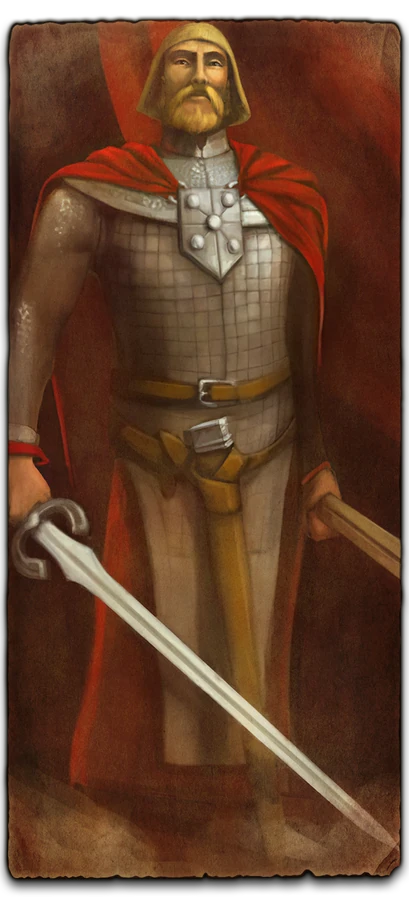
AI identity & army profile
Age advances can let the Portuguese establish additional Town Centers with their wagons, extending Villager production and map presence. Trade and exploration can also support a developing economy. The exact expansion pattern depends on the map and difficulty rather than following one fixed script.
How to prepare
Watch for additional Town Centers and the resource routes that support them. Contest an expansion site when the army can hold it, and protect exposed workers if Prince Henry is spreading out. If left alone, prepare for a longer economic game and avoid allowing extra Town Centers to produce freely.
Economic opening and age timing
Prince Henry’s Portuguese AI is built around a long economic opening. He normally spends the early stages establishing Villagers and gathering resources rather than immediately sending a large force to raid. This delay is a real window for an opponent: pressure on his first settlements can prevent the resource lead that supports his later army. If he is allowed to develop without interruption, however, he tends to advance quickly toward the Industrial Age and can turn the extra time into a powerful late-game economy. The practical response is to scout his Town Center and production, then force him to spend resources on defense before his economy matures. Avoid treating the absence of an early attack as proof that he is inactive; it is usually a deliberate buildup.
Typical land army
His familiar core is Halberdiers, usually supported by artillery. Halberdiers give the formation a durable melee screen and threaten cavalry that tries to reach the guns. The artillery then supplies the ranged damage that the infantry lacks. Against the Portuguese AI in The WarChiefs, expect Horse Artillery or Organ Guns to appear with the Halberdiers. Their presence changes the engagement: a frontal infantry attack can be punished by area damage, while cavalry that slips around the screen can threaten the guns. In the original game without The WarChiefs, the army is more likely to include Hussars, Culverins, Musketeers or Cassadores, though those units are less central to his typical composition. Identify which version and expansion rules are active before predicting the exact mix.
Strengths and pressure points by age
The AI is least comfortable while it is still trying to turn its economic opening into an army. Colonial Age pressure can disrupt Villager growth, buildings and access to resources; continued pressure in the Fortress Age can delay the transition that supports his strongest compositions. His army becomes more difficult to dislodge after he reaches the Industrial Age with a healthy stockpile. At that point, the Halberdier line and supporting artillery can protect one another, while shipments and production replenish losses. Even a strong late force can be vulnerable to a direct raid on its Town Center and economic buildings if its army has been drawn away. The useful timing is therefore to attack before the economy and artillery package are fully established, or to make the army chase threats while another force damages the base.
How to approach his artillery
Culverins and mobile cavalry perform different jobs against his guns. Culverins can engage artillery at range when the player can protect them from infantry, while cavalry can attempt a flank or a rapid strike against exposed pieces. The Halberdiers are positioned to punish that cavalry, so sending horsemen straight through the main formation often trades them away. Use terrain, a distraction or a second approach to split the screen, then focus fire on one artillery unit at a time. If his army includes Organ Guns, keep valuable infantry from bunching together in their firing lane. When Horse Artillery is present, account for its mobility and avoid assuming that a slow siege line will catch it. A successful attack removes the part of the force that makes the infantry screen dangerous to approach.
Recognizing expansion-specific behavior
Age of Empires III and The WarChiefs do not give this AI identical tools. The WarChiefs artillery choices include Horse Artillery and Organ Guns, while the base-game profile described for him more often relies on conventional Portuguese and European options such as Hussars, Culverins, Musketeers and Cassadores. A unit composition observed in one ruleset should not be copied into advice for another. Definitive Edition can also alter balance and campaign or skirmish data over time, so separate the general personality from the precise unit stats shown in the active game. His persistent traits are the economic focus, late army timing, preference for a Halberdier-centered force and reliance on artillery support; the exact roster depends on the edition and available content.
Diplomacy and interaction responses
The leader’s spoken interactions cover common skirmish events rather than changing his military plan. He may request or offer resources, react to a request for assistance, accept or refuse a proposed attack, and respond to a trade monopoly or a discovered treasure. Buildings and other map events can also prompt comments. These lines help identify the AI voice and its reaction to the current match state, but they do not by themselves guarantee that a treaty, shipment or attack has taken place. Read the game state and diplomacy controls alongside the spoken response. This distinction matters when coordinating a team game: a brief agreement line should not be treated as a promise that the AI will immediately move its army or stop gathering resources.
Historical namesake and game role
Prince Henry the Navigator was born in 1394 and died in 1460. The game uses him as the Portuguese AI leader, connecting the civilization’s maritime identity with a historical patron of navigation and exploration. Henry served as governor of the Order of Christ and directed resources toward voyages, chartmaking and navigational work. Portuguese activity during his period helped develop the use of the caravel and expanded knowledge of Atlantic routes. The in-game personality is a strategic interpretation rather than a simulation of a historical battle plan: its long economic opening and artillery-backed army are skirmish behavior designed for play. The distinction helps players understand why the historical biography and the AI’s tactical script appear together on the same entry.
Practical scouting checklist
Track three things as the match develops: age advancement, the number and type of military production buildings, and whether artillery has joined the Halberdier line. Early scouting reveals whether the initial quiet period is producing an economic lead. If the AI advances without resistance, raid Villagers and force repairs rather than feeding units into a prepared formation. Once artillery appears, scout the sides of the army and identify whether he has Culverins or mobile guns before committing your own siege. If his force leaves the base, attack the exposed economy or production structures; if he remains compact, build a combined force that can protect ranged siege and answer cavalry. This keeps the response tied to the army actually fielded instead of a fixed unit recipe.
Keeping the late army supplied
His economic plan explains why repeated small raids can be more effective than one expensive battle. Damage that interrupts Villager gathering or forces him to replace production delays the transition to the Industrial Age, where his preferred artillery-supported army becomes more threatening. If a direct fight is unavoidable, preserve units that can answer artillery and avoid trading expensive cavalry into Halberdiers. After the guns are removed, the infantry line is easier to contain and the Portuguese base is more exposed. In team games, coordinate the timing so that pressure arrives before his economy can recover, and keep scouting after the first engagement: a quiet base may be rebuilding the same late-game force rather than surrendering the map.
What the personality does not imply
The historical title and diplomatic voice do not mean that every line changes the match rules. Prince Henry remains the Portuguese skirmish computer opponent: his most useful identifiers are the patient economy, rapid Industrial Age goal and Halberdier force supported by artillery. Treat event dialogue as flavor or a response to a control rather than a substitute for checking diplomacy, shipment arrival and unit orders in the interface.
Portuguese AI leader and exploration character
Prince Henry the Navigator is the Portuguese AI personality in Age of Empires III and is voiced by Francisco Lorite. He is confident, frequently comments on exploration and may taunt an enemy with sarcastic remarks. The character is associated with Portugal’s exploration theme, but his dialogue does not reveal exact resources or a fixed build order. Use scouting, visible Town Center placement and unit production to judge what the AI is preparing.
Read Portuguese expansion through Town Center placement
Portugal receives an additional Town Center with age advancement, so an AI Portuguese opponent may expand its worker production and territorial control as it ages. Scout the newly placed settlement and the resources around it; that location can reveal where the economy will grow and which route the army must protect. If Henry is an ally, support the new Town Center with units and map control rather than expecting dialogue to coordinate the defense. The civilization’s strategy should be read through its game mechanics, not the leader’s historical reputation alone.