Raid in Delhi
Raid in Delhi is scenario 4 of Act III: India in The Asian Dynasties, set during the 1857 siege of Delhi. Nanib Sahir has shifted sides and leads an Indian force through the city to free the Shah and escort him out alive.
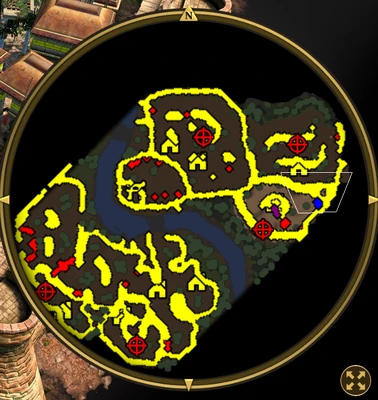
Scenario setting & objectives
Destroy Weapon Caches to trigger an elephant stampede, raze the Agra Fort Wonder to free the Shah, then escort him out of Delhi while keeping him alive. Optional goals free imprisoned Sepoys from Stockades and move the Shah through flagged areas to inspire the city. The stampede is a scripted way to disrupt defenders, so clear friendly troops from its path.
Mission approach
Trigger the stampede only after checking where your own units are standing. Preserve a strong escort for the Shah, clear threats along the exit route before moving him, and treat the survival condition as the priority. Free Stockade prisoners or visit the flagged areas when those detours can be secured without endangering the Shah.
Move through the city and keep the Shah alive
Raid in Delhi is the fourth scenario in Act III: India in The Asian Dynasties. Set during the 1857 Indian Rebellion, it follows Nanib Sahir and Pravar Patel as they move from Meerut toward Delhi and attempt to free Bahadur Shah II from Company control. The scenario starts with a small force of the two heroes and three Sepoys, no ordinary economy to develop and only limited troops. The British India Company patrols Delhi with upgraded forces, chiefly Musketeers as well as Highlanders, Hussars and Dragoons. Avoiding a direct early fight is central to the opening because the starting group cannot replace casualties through normal production. The first primary task is to destroy Weapon Caches and trigger a Riderless Elephant stampede. The stampede can break through enemy positions and creates an opening that a small player force could not make by itself. Use the disruption to move through the city instead of chasing every British patrol. The next objective is to raze the Agra Fort Wonder and release the Shah. Protect him as soon as he joins the force: his survival is an explicit primary objective, and reaching the exit with him is the final requirement. Keep the heroes and combat units between him and the Company troops, and avoid moving the Shah ahead of the army into an unexplored street. The city changes as the rescue progresses. Moving the Shah to marked areas inspires local residents and brings additional forces into the player’s side, including Sepoys, Arsonists and Rajputs. This secondary task rewards routing the Shah through flagged locations, but it should be completed only when the route remains safe. Free imprisoned Sepoys from the Stockades for another secondary reward. The extra soldiers add useful strength for the later escort; freeing them early is valuable if the patrol positions allow a safe approach. The enemy controls fortified positions and patrol routes rather than one isolated base. Company troops are upgraded to Guard or Imperial status, and Outposts provide additional coverage around the small base containing the Agra Fort. The player should use the streets and openings created by the elephants to avoid being surrounded. Focus attacks on a manageable patrol, free nearby allies, then regroup before advancing. Nanib and Pravar provide hero support, but keeping both heroes alive is more valuable than trading them for a small group of enemy soldiers. The limited force benefits from careful target selection and from letting newly inspired units absorb some of the fighting. The scenario does not use ordinary resource gathering, so standard build orders and economic strategies do not apply. Its progression is driven by the objective chain and the units recruited through rescue and inspiration. The map is the city of Delhi, with Indian buildings, walls and streets defining the paths between the Weapon Caches, the Agra Fort and the exit. The main challenge is protecting the Shah while moving through those constrained routes. Once he is safely escorted out, the mission ends; destroying every enemy patrol is not required by the primary objectives. The scenario’s objectives award experience: destroying the Weapon Caches gives 1,500 XP, razing the Agra Fort gives 2,000 XP, safely escorting the Shah gives 10,000 XP and keeping him alive gives 1,000 XP. The optional Stockade rescue grants 250 XP and moving the Shah through the flagged city areas grants 500 XP. These rewards reinforce the intended sequence: create a route, free the Shah, gather support and escort him out. Raid in Delhi is an Act III campaign scenario in The Asian Dynasties; its scripted city, limited starting army and objective-based reinforcements are distinct from standard skirmish play.
Follow the objective order instead of fighting every patrol
The objective chain is a guide to when the small force should take risks. Destroying caches first creates the elephant disruption; rescuing Sepoys and inspiring city residents adds bodies before the final escort. Razing the Agra Fort Wonder opens the Shah’s route, after which the army should move as a protective group toward the exit. If a patrol blocks a narrow street, wait for a safer opening or draw it away from the Shah rather than allowing the escort to become the target. Optional rewards are valuable, but the Shah’s survival and escape remain the conditions that decide success. The scenario’s 10,000 XP escort reward is the largest listed objective payout, reinforcing that extraction is the decisive task. Keep newly freed units with the escort so they contribute during the final movement through hostile streets.
Free and escort the Shah after the Agra Fort is destroyed
The fourth Act III: India scenario recreates the siege of Delhi during the Sepoy Rebellion in 1857. Destroying Weapon Caches triggers an elephant stampede, then the player must raze the Agra Fort Wonder, free the Shah and escort him safely out of the city. The Shah must survive, so clear the escape route before moving him and keep a guard with the escort. Freeing Sepoys from Stockades adds troops, while moving the Shah through marked areas inspires Delhi’s citizens; both are optional and should be attempted only when they do not endanger the Shah. The objective sequence shifts from creating the opening to extraction, so save a mobile force for the final escort rather than committing all units to the Wonder. Keep the freed Shah behind the combat line until the route is secure.