Royal Horseman
Royal Horseman is a late-game heavy cavalry mercenary with a large health pool and area attacks. Its Stampede attack gives it a different role from a standard single-target cavalry unit.
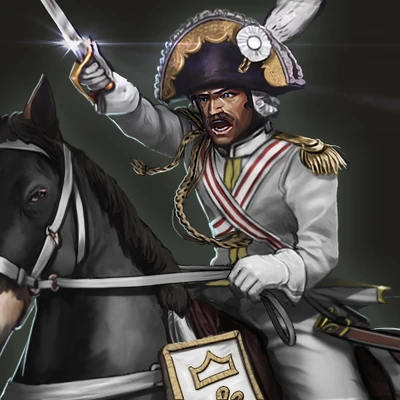
Recorded values
- Cost
- 400 Coin
- Available
- Industrial Age · Tavern (Europeans) ; Monastery (Asians) ; Saloon (Americans) ; Palace (Africans) ; Lombard (Italians) ; Trading Post or Tambo (built on a House of Bourbon palace with the Maison du Roi)
- Training
- 60 sec · 4 population · 50 XP per train
- Durability & mobility
- 1,200 hit points · 30% ranged resistance · 6.25 speed · 15 line of sight
- Siege attack
- 30 base damage · range 6 · attack interval 3.0
- Hand attack
- 30 base damage · attack interval 1.5 · area of effect 3
- Trample attack
- 20 base damage · attack interval 2.0 · area of effect 5
- Stampede attack
- 10 base damage · attack interval 1.0 · area of effect 2 · bonus damage: 0.75x vs. Heavy infantry; 0.75x vs. Light ranged cavalry; 0.25x vs. Building; 0.0x vs. Huntable; 0.0x vs. Tree
Role, availability & values
The unit is accessed through several mercenary buildings or a House of Bourbon path with Maison du Roi. Its recorded profile has 1,200 hit points, 30% ranged resistance and a four-population cost; it is expensive and takes time to field.
Matchup & timing
Send it into a fight where its durability and area damage can affect multiple targets, after anti-cavalry units are occupied or removed. Do not spend the large Coin cost on a frontal charge into a prepared counter line.
Statistics and mercenary cost
The Royal Horseman is an Industrial Age Heavy Cavalry mercenary introduced in Knights of the Mediterranean. It currently costs 400 Coin, takes 60 seconds to train, occupies four population, and yields 50 experience when trained or killed. It has 1,200 hit points, 30% ranged resistance, speed 6.25, and line of sight 15. Its ordinary hand attack deals 30 damage every 1.5 seconds in an area of three; its trample attack deals 20 damage every two seconds in an area of five. It also has a 30-damage siege attack at range six and a distinct Stampede attack that deals 10 damage as it moves. Earlier update values were lower for hit points and Stampede damage, so the current figures should be used for Definitive Edition. The large health pool makes it a powerful damage sponge, but the four-population and Coin costs are substantial.
Stampede mode and positioning
Stampede mode lets the Royal Horseman damage units while moving, but it trades away control and safety. In this mode it moves more slowly, deals less damage, and takes more damage from enemies; its larger area can still pressure a dense formation. Use Stampede when the Horseman can pass through a group without being trapped, not as a permanent stance. Pikemen and Dragoons are dangerous because they can punish the Cavalry while it is exposed. Keep Skirmishers or other ranged Infantry nearby to deter those counters, and switch back to ordinary combat when the Horseman must retreat or focus a target. The movement damage is an added option for disrupting a line, not a replacement for the regular hand attack or a guarantee that the unit can safely cross a defended battlefield.
Comparison with Cuirassier and battlefield role
The Royal Horseman functions like a mercenary counterpart to the Cuirassier. It costs more total resources and population, but offers much more hit points, a larger area effect, and a distinctive Stampede mode. Its durability lets it absorb attention while allied units attack, and its area damage is dangerous to low-hit-point Infantry. It is strong against Light Infantry, counter-skirmishers, and Artillery, but weak against Heavy Infantry, Light Ranged Cavalry, ranged Shock troops, and MercType2 units. Do not send it into a prepared anti-Cavalry formation simply because it has 1,200 hit points. Use it to pressure the units it counters, soak fire during an engagement, or break through a weak line while support handles its counters.
How civilizations gain access
The Royal Horseman is drawn from the map's mercenary pool at the civilization's appropriate recruiting structure: Tavern, Monastery, Saloon, Palace, or Lombard depending on the civilization. A House of Bourbon palace offers a more reliable route. After the Industrial Age Maison du Roi technology is researched at a Trading Post or Tambo built on that palace, the player can train Royal Horsemen and receives one with every new Home City shipment. That route is valuable to civilizations such as the Aztecs or Inca that do not have ordinary Cavalry production. The Dutch can train the unit at Stables through Dutch States Army, which also reduces training time by 15% and increases speed by 7%. French and Italian players who choose The Mercenary Contractor in Fortress Age can train them at a Tavern or Lombard. Germans and the United States have separate shipment-based access.
Economy and Home City support
The 400-Coin cost is cheaper than earlier versions but still makes the Royal Horseman a major Coin investment. Maison du Roi can repay its cost when the player continues to send Home City shipments, since each subsequent shipment also provides a Horseman and the technology costs less than twice the price of one unit. Spanish shipment speed increases the value of that repeated delivery; German mercenary cards can improve mercenary hit points and attack or reduce cost. Dutch States Army adds a different production route with better movement and training time. These interactions are civilization-specific and do not all stack into one universal build. Decide whether the unit will be trained repeatedly, received from shipments, or drawn from a random mercenary pool before building the economy around it.
Use in a mixed army
The Horseman's high hit points make it effective as a frontline anchor for a mixed force. Use it to absorb damage from ranged units and threaten Light Infantry or Artillery, while allied Dragoons or Pikemen protect it from enemy Cavalry and Heavy Infantry. The broad Trample area can punish units that cluster around it, but remaining in the center of the enemy army can expose the unit to its hard counters. In Stampede mode, it can pass through a vulnerable group and spread damage while moving, then return to normal attacks after exiting. Do not chase ranged Cavalry across the map; the Horseman's speed is lower than ordinary fast Cavalry. Its best engagement is one where the player chooses the target and support units control the approach.
Deciding when the mercenary is worthwhile
A Royal Horseman is most valuable when the opponent's army contains targets that its area attack can punish and the player has enough population and Coin to sustain support units beside it. Against Heavy Infantry or ranged Cavalry, the same investment may perform poorly despite the large health pool. Compare it with a Cuirassier or the civilization's standard Heavy Cavalry, and include the added durability, area, mercenary access, and four-population requirement in that decision. If the map's random mercenary pool does not include it, use one of the civilization-specific routes instead of assuming it is trainable. Once the group is fielded, protect the recruiting building and avoid losing units in a bad charge; replacement costs can consume the Coin needed for the rest of the army.
Damage while moving without losing the screen
Stampede mode is most effective when the Royal Horseman can cross a weak formation and exit toward friendly units. Its attack deals 10 damage at a rapid rate in a small area while moving, but it has reduced attack and durability in this stance. Heavy Infantry, Light Ranged Cavalry, and ranged Shock troops can exploit that weakness. Do not use Stampede to push through a protected Pike line. Instead, enter after the enemy is engaged, damage the back edge of the formation, and move behind the allied screen. The ordinary hand and trample attacks remain better when the Horseman needs to hold a position or deal sustained damage to nearby units.
A high-cost frontline unit
Four population and 400 Coin mean the Royal Horseman competes with the rest of the army for space and resources. Its 1,200 hit points and area attacks can justify that cost against Light Infantry or artillery, but screen it from Heavy Infantry and ranged Cavalry before engaging.
Mercenary Cuirassier with more staying power
The Royal Horseman is a Heavy Cavalry mercenary that functions like a Cuirassier. In the documented comparison it costs one-third more resources and population in total, but has substantially more hit points, slightly higher attack and a larger area of effect. This makes it powerful against infantry groups but expensive to field. Use it when the army can exploit its durability and splash damage, not as a routine replacement for cheaper cavalry.
Check availability and protect the investment
Royal Horsemen may appear among randomly available mercenary options, so access can depend on the map and mercenary system. Scout the available camp or shipment before planning a composition around them. Keep them away from concentrated anti-Cavalry fire and artillery, and use ranged support to remove counters before committing. Their large population requirement can crowd out siege and infantry; maintain a balanced force and leave room for reinforcements.