Tokala Soldier
Tokala Soldier is Lakota Heavy cavalry in Age of Empires III, available from the Industrial Age; obtained through Community Plaza (see Tokala Ceremony).
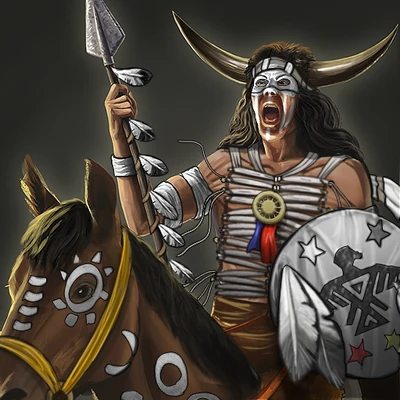
Recorded values
- Cost
- 300 Coin
- Available
- Industrial Age · Community Plaza (see Tokala Ceremony)
- Training
- 55 sec · 3 population
- Durability & mobility
- 550 hit points · 30% ranged resistance · 6.75 speed · 12 line of sight
- Hand attack
- 28 damage · 1.5 attack interval · bonuses: 1.5x vs. Infantry
- Siege attack
- 30 damage · 6 range · 3.0 attack interval · bonuses: 1.5x vs. Shrine, 16; 0.5x vs. AbstractWall
- Trample attack
- 14 damage · 2.0 attack interval · bonuses: Same as hand attack
Role, availability & values
Production is available through Community Plaza (see Tokala Ceremony). It has 550 hit points and 30% ranged resistance. It moves at 6.75 speed and uses 3 population. Training costs 300 Coin; it takes 55 seconds to train. Attack profile: Hand attack deals 28 damage. Siege attack deals 30 damage. Trample attack deals 14 damage. Hand attack bonuses: 1.5× against Infantry. Siege attack bonuses: 1.5× against Shrine, 16 and 0.5× against AbstractWall.
Matchup & timing
Hand attack is especially effective against Infantry (1.5×). Siege attack is especially effective against Shrine, 16 (1.5×). Its reduced multipliers against AbstractWall (0.5×) make it less suitable for those targets. Hold the melee attack for Infantry when they enter contact; reserve the siege attack for Shrine, 16. Keep a frontline between this unit and threats that can reach it safely.
Lakota access and profile
The Tokala Soldier is Lakota Heavy cavalry, called the Dog Soldier before Definitive Edition. It is not produced from a normal Stable queue; it is obtained through the Tokala Ceremony at the Community Plaza, Lakota Town Center Big Button technology, Tribal Council rewards, or specified Home City shipments. The current profile lists an Industrial Age unit with 300 Coin cost, 55 second train time for direct routes, three population, 550 hit points, 30 percent ranged resistance, speed 6.75, and a 28 damage hand attack. Its high health and speed make it one of the strongest native cavalry units, but its late access and limited production routes mean players cannot treat it as an ordinary early cavalry line.
Role and target selection
Tokala Soldiers function like Lancers: they are effective against Infantry and can also threaten Archers and Artillery through their heavy cavalry role. Their attack and durability let them pressure a ranged formation, while speed 6.75 helps them move between engagements. They are vulnerable to anti-cavalry infantry and concentrated fire, so use Lakota ranged units to weaken those counters before committing. The Tokala Soldier has three population and a high Coin cost when trained through a direct route, making each loss expensive. Use the unit to break through a frontline, reach artillery, or punish exposed ranged units rather than trading it against a low value target.
Ceremony and Tribal Council production
Tokala Ceremony at the Community Plaza creates Tokala Soldiers by assigning Villagers to the ceremony. This produces units without the normal Coin cost but diverts Villagers from gathering and can be slow to scale. The Big Button at the Lakota Town Center or a Tribal Council reward can provide another delivery route depending on the game mode and selected age-up. A Home City shipment is a separate method and may create a faster timing. Since these options compete with other ceremonies, shipments, and resource gathering, choose the Tokala route when the army needs a powerful cavalry reinforcement and the economy can spare the Plaza workers.
Upgrade path and late game
Tokala Soldiers receive automatic age based improvements and have named upgrades in later Ages. Elite Tokala Soldier adds 25 percent hit points and damage, Champion Tokala Soldier adds another 25 percent, and Legendary Tokala Soldier adds 50 percent. General cavalry cards and improvements can affect them, while cards that specifically reduce cavalry training time may not apply to Tokala Soldiers produced by the Plaza. This distinction matters when planning a large force: the ceremony's worker commitment and unit output are the limiting factors, not only the unit's listed training time. Keep experienced or upgraded Tokala Soldiers alive and support them with the Lakota War Chief's speed aura.
Population efficiency and practical use
Lakota begin with 200 population capacity, so the Tokala Soldier does not require the same early housing investment as many other cavalry units. This helps the player field a large army, but it does not remove the three population cost per Tokala or the need for Coin and Plaza labor. Their strength in a late game force comes from combining high hit points, speed, and automatic age upgrades. Use them as a decisive cavalry wing alongside Rifle Riders or Wakina Rifles, and avoid leaving them without ranged support against Heavy infantry. If the opponent prepares anti-cavalry units, delay the ceremony or shipment until another Lakota line can create an opening.
Ceremony output tradeoff
Assigning Villagers to Tokala Ceremony reduces resource gathering while the ceremony is active. More workers can increase the military output, but the economy may then lack Food or Coin for the rest of the army. Run the ceremony during a quiet period or after securing a major resource area, and stop it when enough Tokala Soldiers have been produced. The Plaza can provide other benefits, so compare the cavalry reinforcement with healing or economic support before committing a large group of Villagers.
Shipment and Big Button routes
A Home City shipment can deliver Tokala Soldiers more quickly than a ceremony that needs Villagers to work, while the Town Center Big Button offers a separate timing. These methods compete with other Lakota shipments and technologies, so select the route that matches the current battle. Do not count the unit as an ordinary Stable queue when planning replacements.
Frontline protection
Tokala Soldiers can absorb ranged attacks with 30 percent resistance, but Heavy infantry can still punish a direct charge. Use Wakina Rifles to weaken those units and let the Tokalas enter from the flank after the opposing line is occupied.
Age-based value
Because Tokala Soldiers improve as the Lakota advance, a group that survives into later Ages gains value without a separate Stable upgrade queue. Keep the core unit alive and support it with general cavalry bonuses rather than spending on repeated low-value trades.
Large army coordination
A large Tokala group can pressure the opponent from one flank while Lakota infantry holds the center. Keep the War Chief close enough to provide its movement aura, and use the cavalry to reach exposed artillery or ranged units. If the enemy turns its anti-cavalry line toward them, disengage and let the infantry attack from the opposite side.
Shipment selection
Choose a Tokala shipment when its arrival can change the next engagement. If the army needs resources or another counter unit more urgently, use the Home City card elsewhere and rely on Plaza production later.
Replacing losses
Tokala Soldiers are expensive to lose when the army relies on a shipment or a Villager-intensive ceremony. Preserve damaged cavalry and allow age upgrades to improve the surviving group rather than trading it away for ordinary infantry.
Hold the cavalry line
Keep the Tokala group close to supporting Lakota infantry when the opponent has anti-cavalry units.
Free cavalry through the Tokala Ceremony
Tokala Soldiers are powerful Heavy Cavalry associated with the Lakota Tokala Ceremony. They can be obtained through Community Plaza activity and other specified options, allowing the player to convert ceremony time or a card into military strength rather than paying the usual direct resource cost. Their high health, speed and strong attack make them useful for reaching infantry, archers and artillery. Because access is conditional, plan the ceremony or shipment before a timing rather than expecting an ordinary Stable queue.
Use the Lancer role with population planning
Tokala Soldiers function like Lancers: they can attack infantry and are effective against archers and artillery. They still need protection from anti-Cavalry units and concentrated fire, and their population occupies space that might otherwise hold ranged support. Rally them with the main force or use their speed to threaten an exposed flank; do not send them alone into a defended base. If the ceremony is producing them, coordinate the timing with the army so the units arrive where they can be supported.