Mapuche Ironwood Clubman
Mapuche Ironwood Clubman is Heavy infantry in Age of Empires III, available from the Commerce Age; obtained through Trading Post or Tambo on a Mapuche settlement, Native Embassy.
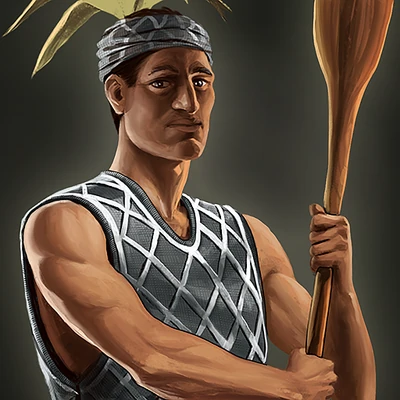
Recorded values
- Available
- Commerce Age · Trading Post or Tambo on a Mapuche settlement; Native Embassy
- Training
- 35 sec · 17 XP per train
- Durability & mobility
- 200 hit points · 20% hand resistance · 4.75 speed · 12 line of sight
- Hand attack
- 24 damage · 2.0 attack interval · bonuses: 2.5x vs. Cavalry; 1.75x vs. Shock troops
- Siege attack
- 26 damage · 6 range · 3.0 attack interval
Role, availability & values
Production is available through Trading Post or Tambo on a Mapuche settlement or Native Embassy. It has 200 hit points. It moves at 4.75 speed. Training costs 100 Food and 65 Wood; it takes 35 seconds to train. Attack profile: Hand attack deals 24 damage. Siege attack deals 26 damage. Hand attack bonuses: 2.5× against Cavalry and 1.75× against Shock troops.
Matchup & timing
Hand attack is especially effective against Cavalry (2.5×), Shock troops (1.75×). Hold the melee attack for Cavalry and Shock troops when they enter contact. Keep a frontline between this unit and threats that can reach it safely.
Melee statistics and native access
The Mapuche Ironwood Clubman is Commerce Age Heavy Infantry and a Native warrior trained at a Trading Post or Tambo on a Mapuche settlement. It costs 100 Food and 65 Wood in Definitive Edition, takes 35 seconds and is limited to eight per settlement. Earlier releases cost 85 Food and 15 Wood, trained in 20 seconds and allowed 15 per site, so older guides describe a very different resource profile. The current unit has 200 hit points, 20 percent hand resistance and speed 4.75. Its 24-damage melee attack hits every two seconds, with 2.5 times damage against Cavalry and 1.75 times against Shock troops. Its area attack adds splash, and siege deals 26 damage at range six every three seconds. This makes the Clubman a durable melee defender against Cavalry and Shock units, with useful siege potential, but the Wood cost and smaller limit make production more selective than in the original game. Keep it close to a Mapuche settlement and use it as part of a mixed native army rather than a free mass unit.
Mapuche Tactics and siege use
Mapuche Tactics is the key technology for turning Ironwood Clubmen into building pressure. It increases their siege attack by 50 percent, and the Clubman already deals area damage in melee. This allows a protected group to threaten Outposts, Town Centers and other structures after the defending army has been pushed away. The unit is similar in role to Doppelsoldners, but it is a native warrior with access and upgrade rules tied to a settlement. It is strong against Cavalry and Shock troops, while Light Infantry, counter-skirmishers and Artillery are listed weaknesses. Do not send the Clubmen alone into a ranged screen. Pair them with ranged Infantry or cavalry that can clear Skirmishers and guns, then use the Clubmen to hold the melee line or siege. Their speed 4.75 is moderate, so avoid a long chase after faster ranged units.
Native upgrades and version differences
Mapuche Warrior Societies costs 100 Wood and 75 Coin in Definitive Edition, compared with 200 of each resource earlier, and upgrades Ironwood Clubmen and Mapuche Bolas Riders to Elite with 25 percent more hit points and damage. Champion Mapuche costs 400 Wood and 300 Coin, requires the first upgrade and adds 35 percent in the current release; older versions used 40 percent. Legendary Native Warriors or Exalted Natives costs 1,500 Food and 1,500 Wood and adds 50 percent to native hit points and damage. Research access depends on civilization: Europeans and Mexico use the Capitol, the United States the State Capitol, and Native American or Asian civilizations the Town Center route; African native warriors upgrade automatically. These shared upgrades can keep a surviving Clubman useful in later Ages, but the low local cap and slower training time still limit replacement speed. Confirm the active release before applying older Food-Wood costs or training limits.
Role in a Mapuche settlement army
The Ironwood Clubman is a native heavy infantry unit recruited through a Mapuche settlement rather than through the ordinary barracks roster. A Trading Post on that settlement, or a Tambo where available, provides access in the Commerce Age; the Native Embassy is another route for civilizations that can field native warriors. Its local limit is eight per settlement in Definitive Edition, so the number of Mapuche sites on the map affects how large a force can be assembled. Each costs 100 Food and 65 Wood and takes 35 seconds to train. This mix competes with early economic construction and standard army production, so the unit is usually a deliberate counter choice instead of an automatic opening. At 200 hit points, 20 percent hand resistance and speed 4.75, it can survive in melee and reach targets at a useful pace. Its two-population-free native classification in the source rules makes its resource and settlement cap more important than population space. Keep the settlement secured: losing access to a contested Trading Post can prevent replacements even if the existing Clubmen survive.
Attack pattern and battlefield strengths
The Clubman’s attack combines broad melee pressure with a separate siege profile. It deals 24 hand damage every two seconds, with a 2.5 multiplier against Cavalry and 1.75 against Shock troops. Its attack has an area radius of two in Definitive Edition, allowing it to damage clustered opponents instead of striking only one model. The siege attack deals 26 damage at range six every three seconds. This makes the unit an effective answer to melee cavalry and shock units and gives it useful pressure against buildings once defenders have been pushed away. Mapuche Tactics adds 50 percent siege damage, sharply improving that structure role. The Clubman resembles other area-damage melee infantry in broad purpose, but its native access, local limit and upgrade path determine when it can be fielded. Do not send it alone into ranged formations: Light Infantry, counter-skirmishers and Artillery can exploit its heavy infantry tag before it reaches melee. Use it as a compact counter group behind a screen or as a follow-up force after cavalry has already been stopped.
Native technologies and improvement options
Mapuche Warrior Societies is a Commerce Age technology that raises Mapuche Ironwood Clubmen and Mapuche Bolas Riders to Elite, adding 25 percent hit points and damage. In Definitive Edition it costs 100 Wood and 75 Coin; the pre-Definitive Edition price was 200 of each resource. Champion Mapuche is a later upgrade for the same units, requiring Warrior Societies and costing 400 Wood and 300 Coin. It adds 35 percent hit points and damage in the current profile, compared with 40 percent in earlier versions. Legendary Native Warriors or the corresponding Exalted Natives upgrade adds a further 50 percent to native warrior hit points and damage where available. Access depends on civilization: European civilizations and Mexico use the Capitol, the United States uses the State Capitol, while Asian and Native American civilizations use their Town Center route; African native warriors upgrade automatically. These technologies are valuable because they improve both the Clubman’s frontline durability and its attack, including its siege value where the affected damage category applies. Track prerequisites before committing resources, since Champion Mapuche cannot be researched first.
Counters, support and version history
The Clubman’s best matchups are opponents who must enter melee, especially Cavalry and Shock troops. Its weaknesses are the reverse: ranged units can deal damage while staying outside its short reach, and Artillery can punish the heavy infantry classification. Pair it with ranged units or Cavalry that can pressure those threats, and avoid a direct approach across open ground under fire. Its low sight of 12 also means it benefits from another unit scouting ahead. Several of its present values differ substantially from the original release: the pre-Definitive Edition version had 165 hit points, 10 percent hand resistance, speed 5.0, a 12-damage hand attack every three seconds, and a 15-unit settlement limit. Definitive Edition changed its cost from 85 Food and 15 Wood to 100 Food and 65 Wood, lengthened training from 20 to 35 seconds and lowered the limit to eight. Those older statistics should not be mixed with current costs when comparing a modern build. Patch 13.58326 later increased the attack to 24 and shortened its interval, while the area damage was added in Definitive Edition.
Choosing the right engagement
Because its basic attack is melee, the Clubman must reach its target to apply the Cavalry and Shock troop bonuses. Its speed of 4.75 is respectable for heavy infantry, but it cannot dictate a fight against faster Cavalry or outrange bow units. Let an opponent commit into a choke, or use friendly ranged troops to force the enemy to approach, then bring Clubmen forward once they can connect. The area radius of two makes dense formations more favorable targets, so a group can trade better when the enemy bunches around a narrow passage or a building. Its 26 siege damage is modest without Mapuche Tactics, but becomes much more threatening with the technology’s 50 percent siege increase; use that improved profile after the opposing army has been displaced. Since its limit is per Mapuche settlement, identify and protect the settlement before planning a sustained Clubman composition. A single site supports only a finite force, while additional settlements can expand the available pool where the map allows. This recruitment constraint is a tactical consideration as much as an economic one.
Resource and replacement planning
The Clubman draws on both Food and Wood, so its production competes with Settler growth, buildings and other military choices. The 35-second training time also means a lost group cannot be replaced immediately, especially when the settlement limit is already occupied. Upgrade costs should be planned around that replacement burden: Warrior Societies improves the unit and its Mapuche Bolas Rider counterpart, while Champion Mapuche requires that first investment. When only a small number of Clubmen are needed to stop a Cavalry push, delaying the Champion upgrade may preserve resources for the rest of the army. If the plan is to rely on a long-lived native force, upgrading before the main engagement gives the larger hit point pool and attack bonus time to repay its cost.
Area damage and building pressure
The Mapuche Ironwood Clubman is a heavy melee fighter whose large club deals area damage, allowing it to threaten grouped units as well as individual targets. It resembles the Doppelsoldner in its broad role and becomes a stronger building destroyer when Mapuche Tactics is researched. Use it where it can reach a cluster or exposed structure, but do not march it alone into ranged fire. Its slow melee approach gives the opponent time to focus it before the club can connect.
Warrior Societies upgrade and support
Mapuche Warrior Societies upgrades Ironwood Clubmen and Bolas Riders to Elite, granting 25% more hit points and damage in the documented profile. Research it when those units form a meaningful share of the army; the benefit is wasted if production has shifted elsewhere. Keep ranged support nearby and use Bolas Riders or other mobile units to disrupt targets that would kite the Clubmen. The Ironwood Clubman can create siege pressure, but a protected force still needs anti-Cavalry and ranged support to reach the building.