Mapuche Bolas Rider
Mapuche Bolas Rider is ranged cavalry in Age of Empires III, available from the Commerce Age; obtained through Trading Post or Tambo on a Mapuche settlement, Native Embassy.
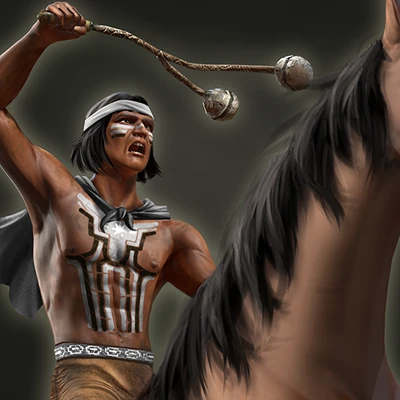
Recorded values
- Available
- Commerce Age · Trading Post or Tambo on a Mapuche settlement; Native Embassy
- Training
- 30 sec · 18 XP per train
- Durability & mobility
- 200 hit points · 20% ranged resistance · 6.5 speed · 15 line of sight
- Ranged attack
- 14 base damage · range 3-12 · attack interval 3.5 · area of effect 2 · bonus damage: 2.5x vs. Heavy cavalry; 2.5x vs. Hand shock trooper; 2.0x vs. Artillery; 0.75x vs. Light ranged cavalry; 0.75x vs. Ranged shock trooper; 0.5x vs. Villager
- Siege attack
- 9 base damage · range 6 · attack interval 3.0
- Hand attack
- 11 base damage · attack interval 1.5
Role, availability & values
Production is available through Trading Post or Tambo on a Mapuche settlement or Native Embassy. It has 200 hit points and 20% ranged resistance. It moves at 6.5 speed. Training costs 90 Food and 90 Wood; it takes 30 seconds to train. Attack profile: Ranged attack: 14 damage at range 3-12; every 3.5 seconds; area of effect 2. Siege attack: 9 damage at range 6; every 3.0 seconds. Hand attack: 11 damage; every 1.5 seconds.
Matchup & timing
Use the unit’s 6.5-speed movement to choose the approach, threaten an exposed flank, and pull away before anti-cavalry forces can surround it. Its listed attack bonus makes Heavy cavalry, Hand shock trooper, and Artillery priority targets. Keep a clear retreat route and bring it back to the main army when the opponent protects the economy.
Ranged attack and snare
The Bolas Rider’s ranged attack deals 14 damage at range 3–12 every 3.5 seconds and affects an area of two. It applies a temporary snare to the target, reducing movement speed so a cavalry force has less ability to reach its chosen target or escape. The attack has a 2.5 multiplier against heavy cavalry and hand shock troops, and 2.0 against artillery. It is much less effective against light ranged cavalry and ranged shock troops at 0.75, and deals only half damage to Villagers. The snare and splash damage are strongest when enemies are grouped; spreading the target formation reduces the area value. Its 11-damage hand attack is a fallback, not its primary weapon, so keep distance and let the ranged attack control movement.
Base cost, speed and unit cap
The native version costs 90 Food and 90 Wood, takes 30 seconds to train and has a limit of eight per Mapuche settlement. It has 200 hit points, 20% ranged resistance, speed 6.5 and line of sight 15. The 90 Wood cost distinguishes it from Coin-costing ranged cavalry such as Dragoons, but its output is also limited by the settlement cap. It uses one population under the standard profile. These numbers make it a limited support force rather than a unit to mass without restriction. The 6.5 speed helps it move around a frontline and stay near cavalry targets, but it is slower than some conventional ranged cavalry and needs a clear retreat route when light infantry begins firing.
Target choice and counters
Choose heavy cavalry or hand shock troops as priority targets, especially when the enemy moves in a tight group. The 2.0 artillery multiplier lets the Bolas Rider threaten exposed guns, but advancing into a protected artillery line can still be dangerous. Light infantry, heavy infantry, light ranged cavalry and ranged shock troops are unfavorable matchups. Many of these units can exploit its light ranged cavalry classification or range. Use heavy infantry to screen skirmishers and archers, and avoid sending the Bolas Riders forward before the screen. Their ranged attack also deals reduced damage to Villagers, so raiding workers is usually less efficient than slowing cavalry or damaging exposed artillery.
How it compares with Dragoons
The unit fills a Dragoon-like role as mobile ranged cavalry, but the details differ. Compared with Dragoons, the Bolas Rider has less speed and ranged attack and lacks the same hand-attack multipliers. In return, it costs Wood rather than Coin and its ranged weapon has area damage and a snare. That makes it particularly useful when cavalry is grouped or needs to be slowed for a follow-up attack, but it is not a direct substitute for every Dragoon matchup. A Bolas Rider group benefits from a heavy-infantry screen: the screen can protect it from light infantry while the bolas control cavalry. Use its snare to limit an enemy’s movement rather than expecting the unit to win a prolonged ranged exchange by itself.
Native recruitment and revolution access
The native-warrior version is associated with a Trading Post or Tambo on a Mapuche settlement, with an eight-unit limit at each settlement. The Inca can access Mapuche allies by sending American Allies and choosing the Mapuche, which enables Native Embassy recruitment and several Mapuche technologies. Peru can also choose the Mapuche through its American Allies card. The mercenary version is separate: it can be shipped regardless of map and has a limit of ten. The Inca’s 10 Mapuche Allies shipment provides a repeatable card route, while Chile can ship seven Bolas Riders and unlock training from Stables, Forts and Galleons. These different methods affect map dependence, unit cap and production source; a shipment does not imply that every civilization can train the unit locally.
Upgrade path and team use
Mapuche Warrior Societies costs 100 Wood and 75 Coin in the Commerce Age and upgrades the unit to Elite, adding 25% hit points and damage. Champion Mapuche costs 400 Wood and 300 Coin in the Fortress Age and adds 35% after the first upgrade. The applicable Imperial native-warrior technology costs 1,500 Food and 1,500 Wood and adds 50% for the Legendary level. Availability depends on the civilization and its upgrade building. Cards and technologies can further improve cavalry hit points, attack, range or movement. Since the unit is capped at each native site, upgrades can be more efficient than attempting to increase the group past that limit. Coordinate it with units that can screen light infantry and capitalize on the time created by the snare.
Battlefield sequence
A practical engagement begins with scouting the opposing cavalry and keeping Bolas Riders just behind the main line. Let the enemy commit, then focus volleys on one target so the snare and area damage reduce its ability to disengage. Heavy infantry or another durable screen should prevent light infantry from focusing the riders. If the opponent switches to skirmishers or ranged cavalry, pull the Bolas Riders behind the screen rather than trading at a disadvantage. When the enemy artillery is exposed, the 2.0 multiplier can justify a brief flank, but retreat once the support turns. The unit’s best contribution is controlling the pace of a cavalry fight and adding flexible ranged damage, not holding the frontline.
Why the cap changes its use
The eight-per-settlement native limit means a single Mapuche site cannot supply an unlimited Dragoon-style line. A second settlement can increase access, but that requires finding and holding another native site; it is not equivalent to placing an ordinary Stable. The mercenary version has a separate ten-unit limit and can be shipped regardless of map, so it serves as a broader but still capped option. Plan the army around the available count: use a limited group to snare cavalry and threaten artillery, then spend remaining resources on units that cover its light-infantry weakness. If the opponent fields few cavalry targets, do not pay for every available Bolas Rider merely because the limit allows it.
Technology and card priorities
The unit benefits from cavalry improvements such as Ranged Cavalry Caracole, which raises attack, range and line of sight. Other cards or native technologies can improve hit points, speed or attack rate, and Mapuche-specific upgrades can strengthen its base statistics. These bonuses make it easier to maintain the snare and reach targets, but they do not remove the counter relationship with light infantry. Prioritize improvements when the force will stay in play long enough to benefit; if the group is small and the game is ending soon, an immediate counter-unit shipment may have greater impact. Native-site upgrades also compete with other settlement technologies, so compare the Bolas Riders’ likely targets and limited cap with the rest of the Mapuche alliance.
Protect the retreat
Because the snare briefly disrupts an enemy’s movement, the rider can help the whole army disengage. Focus fire on the fastest pursuer, then move the group behind heavy infantry while the slowed cavalry loses contact. Do not stay to trade with skirmishers once they target the riders.
Spacing and focus fire
The area effect rewards focusing several riders on a compact group rather than splitting shots across distant targets. When the opponent spreads out, prioritize the unit whose movement matters most—usually the cavalry threatening your ranged line—then reposition before the rest of the enemy army arrives.
Damage, snare and area attacks
The Bolas Rider’s 14 ranged damage fires every 3.5 seconds, so its main value is a controlled volley rather than a high firing rate. Before resistance and upgrades, a shot reaches 35 damage against Heavy Cavalry or Hand Shock Troops, 28 against Artillery, 10.5 against Light Ranged Cavalry or Ranged Shock Troops, and 7 against Villagers. Its area radius of two can affect nearby targets, while the bolas also snares the struck unit. The range of 3–12 means it cannot fire at very close targets, so avoid letting infantry or cavalry cross that minimum distance. Use the snare to slow a retreating cavalry group or interrupt its approach, then move behind the screen while the target is slowed. Treat these calculated values as pre-resistance damage; the enemy’s armor, upgrades and number of targets hit still determine the actual result.
Mapuche ranged cavalry and area damage
The Mapuche Bolas Rider is ranged cavalry recruited through a Mapuche settlement’s Trading Post or Tambo, or a Native Embassy where access is available. Its 14-damage attack reaches 3–12 range and has an area effect, allowing it to pressure nearby groups while remaining mobile. At 6.5 speed and 200 hit points, it can flank or respond across the map, but 20% ranged resistance does not protect it from anti-cavalry units that close in.
Alliance cost and target selection
The Rider costs 90 Food and 90 Wood and takes 30 seconds to train. Keep the settlement post secure so the alliance remains available, and compare its roster with other Native options before investing. Use the area shot against grouped targets and withdraw when enemy cavalry or melee units can pin it down. Its nine-damage siege attack is secondary; choose a dedicated siege force for defended structures. The Mapuche alliance is map-dependent, so scout before planning a continuous queue.