Doppelsoldner
Doppelsoldner is German Heavy Infantry that deals area damage in melee. Its sweeping attack is particularly dangerous to Cavalry and other units that bunch around a frontline, and it can contribute siege pressure against buildings after the army wins space. The unit is expensive, occupies more population than ordinary infantry and must reach close range before its strongest attacks matter. Ranged fire can weaken it during the approach.
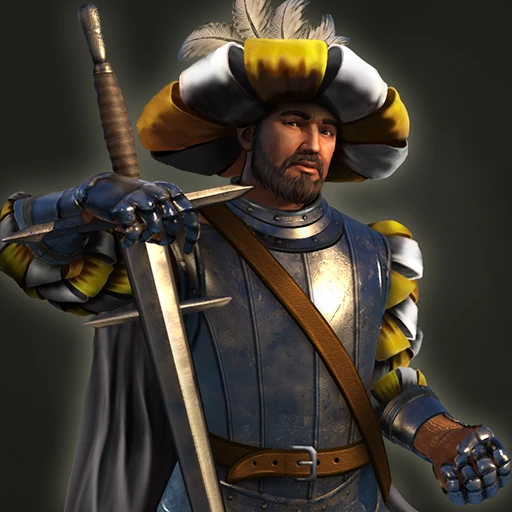
Recorded values
- Available
- Commerce Age · European Barracks; Fort; Galleon; American Citadel; Steamer (Gran Colombia)
- Training
- 45 sec · 2 population · 20 XP per train
- Durability & mobility
- 240 hit points · 20% hand resistance · 4.5 speed · 12 line of sight
- Hand attack
- 20 damage · 1.5 attack interval · bonuses: 3.0x vs. Cavalry; 2.0x vs. Shock troops
- Siege attack
- 60 damage · 6 range · 3.0 attack interval
Role & counters
Use Doppelsoldners as a protected melee threat. Let a frontline or terrain bring enemy Cavalry into contact, then exploit the area attack rather than sending the unit across open ground alone. Keep them away from Skirmishers and other ranged counters that can kite or focus them. Their siege role can help in a push, but only after the area is secure.
When to field it
Choose them when scouting shows cavalry or a dense army that must fight at close quarters, and when the German economy can afford the high cost. They pair well with mobile units that can create an engagement, but should not chase faster targets. Avoid investing heavily if the opponent can keep distance or is massing effective ranged counters.
Current statistics and area attack
The Doppelsoldner is a Commerce Age German heavy infantry swordsman. It costs 75 food and 125 coin, takes 45 seconds to train, uses two population, and has 240 hit points with 20% hand resistance. It moves at speed 4.5 and has line of sight 12. Its two-handed sword deals 20 damage every 1.5 seconds across an area of 2, with a 3.0 multiplier against cavalry and 2.0 against shock troops. Its siege attack deals 60 damage at range 6 every 3 seconds, making it unusually effective against buildings for a unit available this early. The area sweep lets one strike damage several clustered enemies, so it can trade especially well in close formations. Its value is offset by the high coin cost and two-population use compared with a Halberdier.
Combat role and counters
Use Doppelsoldners to punish cavalry, shock troops, and other units that are forced to fight at close range. They also provide a durable screen for ranged troops and can demolish buildings quickly once defenders are cleared. Light infantry and artillery are their main counters: skirmishers can attack from outside sword range, and artillery punishes the slow melee approach. Their speed is 4.5, which makes them easier to reposition than many infantry but still too slow to catch ranged units without support. Pair them with Uhlans or other cavalry that can chase skirmishers, and add Crossbowmen to protect the formation from heavy infantry at range. Do not spend the entire early economy on Doppelsoldners; their food-and-coin cost competes with the German economy and their population use can limit the supporting army.
Siege pressure and mixed formations
A group of Doppelsoldners can threaten a base even when the opponent expects conventional infantry. Their 60 siege damage and area attack allow them to break buildings while still defending themselves against cavalry that tries to dive onto the siege line. Use them to pressure an exposed Barracks, Stable, or Town Center after clearing ranged counters. Their hand damage applies over an area, so avoid splitting them into small groups against a compact enemy force; keeping the swordsmen together improves the chance that each sweep hits several targets. The same concentration makes them vulnerable to artillery, so spread out when cannon fire is incoming and use cavalry to remove the guns.
Upgrade path and Chinese Consulate counterpart
Veteran Doppelsoldners costs 200 wood and 200 coin in the Fortress Age and adds 20% hit points and damage. Guard Doppelsoldners costs 600 wood and 600 coin in the Industrial Age, adds 30%, and requires Veteran. Imperial Doppelsoldners costs 1,500 wood and 1,500 coin and adds 50% after Guard. The Chinese can obtain the related Zweihänder through the German alliance at the Consulate; German Expeditionary Company or German Expeditionary Force shipments include three, and the Intervention card can send five when the German allies are selected. The Consulate unit receives automatic age improvements and has a slightly different starting profile. It is related to, but not the same production unit as, a German Doppelsoldner.
Version and access notes
The unit is unique to the Germans and can be trained at the European Barracks, Fort, or Galleon; the American Citadel and Gran Colombia's Steamer are also listed access buildings. Definitive Edition raised its hit points from the older 230 profile to 240. The name is commonly written Doppelsoldner in English, while the correct German spelling is Doppelsöldner. The large sword's area damage and high siege attack are its defining mechanics across versions, but balance comparisons should use the active build's health and upgrade rules.
When the early melee investment works
Doppelsoldners can overwhelm an early position if the opponent lacks light infantry and artillery, since every sweep threatens both the front unit and nearby troops and their high siege attack quickly punishes exposed buildings. The risk is economic: a force costs substantial coin, takes two population per soldier, and moves only at infantry speed. Use the German economy and shipments to support a mixed army rather than training only swordsmen. Uhlans can chase skirmishers and raid gatherers, while Crossbowmen engage heavy infantry at range; the Doppelsoldners then hold the center and punish cavalry that tries to reach those supports. Later in the game they can still serve as a cavalry screen or siege unit, but their role should be adjusted once enemy artillery and upgraded light infantry arrive.
Area damage and siege trade-offs
The sword's area radius is 2, which means a clustered enemy formation can take damage from each swing. The attack is strongest when several targets remain within reach, but the same grouping can expose the Doppelsoldners to artillery splash. Their 60 siege damage is fixed as a separate attack and does not make them immune to defensive fire. Approach under cover, split briefly when cannon volleys land, then regroup to use the area attack against cavalry or shock troops.
German roster fit
The unit complements German cavalry by punishing enemies that stand to fight, while Uhlans cover the ranged counters that swordsmen cannot catch.
German two-population melee Infantry
The Doppelsoldner is a Commerce Age German heavy Infantry unit available at the European Barracks, Fort and eligible ships. It costs 75 Food and 125 Coin, takes 45 seconds to train and occupies two population. It has 240 hit points, 20% hand resistance and speed 4.5. Its 20-damage hand attack fires every 1.5 seconds, affects an area of two and deals 3× damage against Cavalry and 2× against Shock troops. The 60-damage Siege attack gives it a strong role after a formation wins ground. Its slower speed and high Coin cost mean it should anchor a line or protect artillery, not chase mobile units across the map.
Area attacks and resource planning
Keep Doppelsoldners close enough to hit units that engage the frontline, and let their area attack punish groups rather than isolated targets. Their anti-Cavalry bonuses can deter a mounted charge, while ranged Infantry can damage them before they reach melee. Add Skirmishers or other ranged support to cover that weakness. The two-population cost and Coin-heavy price can constrain a German army that also needs Uhlans, upgrades or artillery. Build them when the opponent’s Cavalry or Shock troops justify the investment, then use their Siege attack against a structure once the opposing army retreats. German shipment access and compatible cards can change their timing, so distinguish an immediate shipment from the slower Barracks queue.