Shogun Tokugawa
Shogun Tokugawa is Japanese hero in Age of Empires III. Its listed ability is Trains Japanese infantry, cavalry, Shinobi, and artillery; Auto scout.
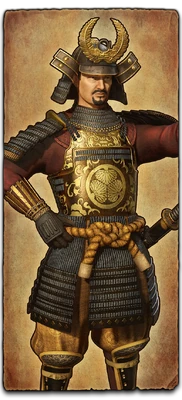
Recorded values
- Durability & mobility
- 2,000 hit points · 40% ranged resistance · 7.5 speed · 24 line of sight
- Siege attack
- 14 base damage · range 6 · attack interval 3.0
- Hand attack
- 45 base damage · attack interval 1.5
- Trample attack
- 30 base damage · attack interval 2.0 · area of effect 3
Role, availability & values
It has 2,000 hit points and 40% ranged resistance. It moves at 7.5 speed. Attack profile: Siege attack: 14 damage at range 6; every 3.0 seconds. Hand attack: 45 damage; every 1.5 seconds. Trample attack: 30 damage; every 2.0 seconds; area of effect 3. Special ability or role: Trains Japanese infantry, cavalry, Shinobi, and artillery; Auto scout. If reduced to zero hit points, it collapses rather than dying; after regenerating 100 hit points, a friendly unit or building nearby can revive it.
Matchup & timing
Use its training ability when Japanese infantry, cavalry, Shinobi, and artillery are needed; keep the hero safe while units are being produced. Use auto-scouting to reveal a route while the main army handles another task, then check the exposed path before sending the hero into combat. Withdraw between fights when damaged so regeneration can restore health instead of risking the hero for marginal damage. If it collapses, keep a friendly unit or building nearby and protect the recovery period until it reaches 100 hit points.
Two distinct Tokugawa profiles
The source article covers both a campaign hero and a separate Industrial Age Shogun in random-map play. They are not the same stat profile. This entry’s recorded ability describes the campaign Shogun: a Japanese hero with 2,000 hit points, 7.5 speed, 40% ranged resistance, unit training, and automatic scouting. The skirmish Shogun is shipped from the Home City, costs Coin, uses four population, and has different health, speed, attack, and support effects. Always check the mode before applying a value or ability; do not transfer skirmish shipment mechanics to the campaign scenario.
Campaign role and durability
In the Japanese campaign, Tokugawa commands troops as a heavy-cavalry hero and can train Japanese infantry, cavalry, Shinobi, and artillery. He has 2,000 hit points and 40% ranged resistance, moves at 7.5, and sees 24 range. His hand attack deals 45 damage every 1.5 seconds; the siege attack deals 14 at range six every three seconds, and the trample attack deals 30 in an area of three every two seconds. These values let him lead a small group and remain present while producing reinforcements, but he should still be protected from concentrated fire and enemy counters.
Divine Strike and target selection
Divine Strike is a passive ability that gives Tokugawa a 25% chance to instantly kill an enemy unit with fewer than 200 hit points when he attacks. Attack boosts affect the ability. It can make his strikes particularly dangerous to fragile units, but the chance is not guaranteed on every hit and should not be treated as predictable damage. Choose targets where a successful strike changes the fight, while keeping Tokugawa near support. His ordinary attack profile remains important against targets that do not meet the low-health condition.
Convert Guardian for treasure control
Tokugawa can convert a Treasure guardian to his side; the conversion takes four seconds and has a 90-second cooldown. This gives him a way to remove a guardian from the opposing side and add it to the player’s force, but the ability takes time while nearby enemies can still threaten him. Use it when the guardian is a meaningful obstacle or the reward is worth securing. Do not begin the channel in the middle of an enemy army, and remember that this is a campaign-hero ability rather than a standard Home City shipment effect.
Treasure and exploration utility
Tokugawa can claim Treasures, and his high durability makes him useful for exploring routes that would be risky for ordinary units. His 24 line of sight and automatic scouting behavior help reveal areas while the army performs another task. Automatic scouting does not guarantee that every route is safe: inspect the revealed ground before moving fragile troops or siege through it. Unlike the Sohei Archer, Tokugawa cannot build Trading Posts, Shrines, or Town Centers, so use him for scouting and hero actions rather than expecting him to establish infrastructure.
Training units while stationary
Tokugawa’s campaign training ability provides access to Japanese infantry, cavalry, Shinobi, and artillery. He cannot move or attack while training, so choose a protected location and a safe moment. This creates a tradeoff: the hero’s presence at the front can turn into reinforcements, but leaving him exposed or immobilized can invite an attack. Keep a screen around him and resume movement once the units are ready. Training from the hero can also make a forward force more self-sufficient when ordinary production buildings are distant.
Campaign training options by age
In Commerce Age, the listed options include Yumi Archers for 55 Food and 50 Wood, Ashigaru Musketeers for 80 Food and 40 Coin, Samurai for 95 Food and 95 Coin, Naginata Riders for 100 Food and 100 Coin, and Shinobi for 30 Food and 85 Coin. The first two use one population; Samurai and Naginata Riders use two, while Shinobi uses one. Fortress Age adds Yabusame for 60 Food and 150 Coin and Flaming Arrows for 100 Wood and 300 Coin. Industrial Age adds Morutaru for 100 Wood and 350 Coin. Select units according to the enemy and the resources available rather than training a mixed force without a role.
Production speed and card combinations
The campaign article notes that Bakufu and Veteran Battery Home City Cards can let Tokugawa train units nearly instantaneously. This turns the hero into a powerful source of reinforcements, but it depends on the cards and the player’s ability to pay each unit’s cost and population. The cards therefore reward a planned production window: gather the needed resources, keep population space free, and position Tokugawa where the new troops can join the army. Rapid training does not protect the hero while he is stationary, so hold a defensive line around him during the queue.
Collapse and recovery
Like other heroes, Tokugawa collapses rather than dying when his hit points reach zero. He must regenerate at least 100 hit points and have a friendly unit or building nearby so he can be revived. His own regeneration works while he is idle, but the campaign profile specifies that he does not recover while loaded into a boat. If he falls, secure the area, leave an ally close, and protect the recovery period rather than moving the whole army away. Preventing collapse is usually better because losing the hero interrupts scouting and unit production.
Protect the hero during the ability cooldown
Bulky hit points and ranged resistance make Tokugawa durable, but neither prevents him from being surrounded. After using Convert Guardian or Divine Strike to win a local advantage, reposition before enemy reinforcements arrive. Use allied troops to screen his retreat and avoid sending him alone into artillery or a large group of heavy units. His value includes training and scouting, so taking unnecessary damage can cost more than the health bar: it may interrupt production, exploration, and the timing of the next engagement.
Campaign use versus the random-map Shogun
The random-map Shogun is an Industrial Age Japanese unit trained through The Shogunate after its Home City shipment. The source lists a 750-Coin cost, a 100-second train time, a limit of one, 1,500 hit points, 30% ranged resistance, and 6.5 speed in the Definitive Edition; older versions had different Coin and experience values. It receives shipments, can train certain units, and supports nearby troops with Sankin Kotai. These mechanics are separate from the campaign hero’s Convert Guardian, 2,000 hit points, and 7.5 speed. Use the dedicated mode label when looking up exact values.
Skirmish Shogun abilities and limits
In random-map play, the Shogun is a more powerful Daimyo with access to Yamabushi, Shinobi, and artillery rather than the Daimyo’s usual infantry and cavalry production. Sankin Kotai increases nearby friendly units’ hit points, and Health Regeneration supports recovery. He can be retrained at The Shogunate if lost, under the applicable rules. Because the unit uses four population and is limited to one, keep him protected and near troops that benefit from his support. Do not confuse this role with the campaign profile, which cannot receive Home City shipments and follows different training rules.
Attack profile and combat purpose
The skirmish version’s recorded attacks are stronger than the campaign unit’s: 120 hand damage every 1.5 seconds, 40 siege damage at range six every three seconds, and 90 trample damage in an area of three every two seconds. Its role is therefore a high-value command unit with combat, shipment, and production utility. The campaign values are 45 hand, 14 siege, and 30 trample damage. Keep the two profiles distinct in strategy: the campaign Tokugawa can convert Treasure guardians and auto-scout, while the skirmish unit’s special value is its Home City access and aura.
Choose reinforcements for the opposing force
Tokugawa’s production choices cover several battlefield roles. Yumi Archers and Ashigaru Musketeers provide ranged infantry, Samurai offer a heavier melee unit, Naginata Riders add cavalry, and Shinobi provide a specialized option. Later ages add Yabusame, Flaming Arrows, and Morutaru. This breadth lets the Japanese force respond to the mission, but each choice spends resources and population. Scout the enemy before training; producing artillery when cavalry is reaching Tokugawa or cavalry when the army needs ranged protection may leave the force unbalanced.
Coordinate scouting with the main army
Automatic scouting can reveal the map while Tokugawa or the Shogun’s force is occupied elsewhere. Use the information to identify enemy production, Treasure guardians, and safe reinforcement paths, then redirect the main army based on what is revealed. The hero’s mobility helps him move between tasks, but an auto-scout path may enter combat without the player’s immediate control. Keep track of his health and interrupt scouting when a dangerous threat appears. He is too valuable as a trainer and command unit to leave unattended near a strong enemy force.
Practical command sequence
A reliable sequence is to scout a manageable route, use Convert Guardian when a Treasure or guardian matters, train the units needed for the next fight from a safe position, and then move with the resulting force. In the campaign, keep Tokugawa idle on land between engagements if he needs to regenerate; do not expect recovery while he is in a boat. In random-map play, time Home City shipments and The Shogunate access separately. This sequence uses the hero’s exploration and production without confusing the campaign and skirmish rulesets.
When to preserve rather than attack
Tokugawa’s combat strength can tempt the player to send him into every fight, but his strategic value is larger than his attack. If he is the only source of a needed unit type or the army depends on his scouting, retreating at low health preserves future options. Use the high hit points and Divine Strike to create a local opening, then let supporting units finish the fight. If he collapses, stabilize the area and recover him rather than treating the hero as a disposable frontline unit.
Summary of the Shogun’s value
The campaign Tokugawa combines a durable hero, guardian conversion, treasure collection, automatic scouting, and flexible Japanese production. The random-map Shogun instead provides a high-cost Industrial command unit that receives shipments, trains selected units, and supports nearby troops with Sankin Kotai. Both can influence an army beyond ordinary damage, but their stats and rules differ. Check the mode, protect the hero while stationary or recovering, preserve population and resources for production, and use the unit’s special abilities to solve a specific battlefield problem.
Costs and population shape the training choice
The campaign training table spans Food, Wood, and Coin, and unit population ranges from one to four. A Flaming Arrow costs 100 Wood and 300 Coin and uses four population; an Ashigaru Musketeer costs 80 Food and 40 Coin for one. Consider what the army can afford and how much population remains before selecting a new type. A strong unit that cannot fit under the population cap is not an immediate reinforcement.
Home City shipments are mode-specific
The campaign hero cannot receive Home City shipments, while the random-map Shogun can. This is a defining rule difference, not a minor balance detail. Campaign reinforcements instead use the scenario’s training abilities and available card deck; random-map shipment timing depends on the Home City and The Shogunate. Check the mode before planning around a card or expecting the hero to act as a shipment point.
Use idle recovery between expeditions
The campaign Shogun’s idle regeneration makes a short pause useful after a guardian fight or raid. Move him to a safe area on land and let his health recover before using Bulava Maul again. Recovery does not occur while he is loaded in a boat according to the campaign profile, so plan transport after the hero has recovered rather than relying on the voyage to restore him.
Keep the hero’s role aligned with the objective
When the objective requires exploration, let Tokugawa reveal routes and claim safe Treasures; when the force needs a counter, use his training ability to add the appropriate Japanese unit. During a direct fight, keep him with the army and use his abilities on targets that matter. This flexible role is most effective when the player switches tasks deliberately instead of leaving him idle or exposing him as an unsupported attacker.
Japanese commander and unit trainer
Shogun Tokugawa is a Japanese hero with 2,000 hit points, 40% ranged resistance, speed 7.5 and sight 24. He has a 45-damage hand attack every 1.5 seconds, a 14-damage Siege attack and a 30-damage Trample attack over an area of three. Tokugawa can train Japanese Infantry, Cavalry, Shinobi and artillery, and can automatically scout the map. While training, he cannot move and attack; he also cannot receive Home City shipments or use Convert Guardian according to the source profile. This makes him a mobile production point, but the choice to stop and train units creates a window where he is exposed.
Divine Strike, collapse and recovery
Divine Strike gives Tokugawa a 25% chance to instantly kill an enemy unit with fewer than 200 hit points when he attacks; attack boosts affect the ability. Convert Guardian is a separate ability with a four-second conversion time and 90-second cooldown, where available. His health regeneration supports the hero over a long match, and reaching zero hit points causes him to collapse rather than die. A friendly unit or building can revive him after he regenerates 100 hit points. Keep a screen near him when he is training or recovering, and use his speed to scout without abandoning the main army. His inability to receive shipments distinguishes him from a Home City rally point; train reinforcements only when the location is safe and the next unit batch is worth pausing movement.
Tokugawa Ieyasu in Age of Empires III
Shogun Tokugawa represents Tokugawa Ieyasu, the Japanese leader featured in The Asian Dynasties. He appears in the Japanese campaign and also informs the Japanese AI personality on random maps. The campaign uses his political and military rivalry with other Japanese leaders to frame its account of the struggle for control of Japan, including the events around Sekigahara. This character entry describes a named historical figure within the game’s setting, rather than a standard Japanese unit that can be produced from a military building.
Campaign character and match context
The campaign portrays Ieyasu as a cautious strategist who values survival and timing, and his relationships with the other characters shape the missions’ political stakes. On random maps, the AI personality is a separate use of the same identity: it affects the opponent’s presentation and play style, not the player’s unit roster. Consult the campaign’s own objectives to understand what the player must accomplish in each scenario. The character’s historical background provides context for the storyline, while the scenario rules determine the actual forces, abilities and mission conditions.