Apache Cavalry
Apache Cavalry is ranged cavalry in Age of Empires III, available from the Commerce Age; obtained through Trading Post or Tambo on an Apache settlement, Native Embassy.
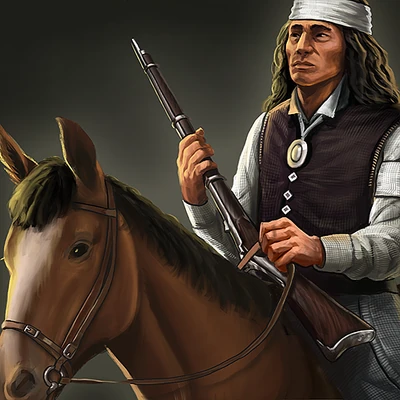
Recorded values
- Available
- Commerce Age · Trading Post or Tambo on an Apache settlement; Native Embassy
- Training
- 40 sec · 18 XP per train
- Durability & mobility
- 200 hit points · 30% ranged resistance · 7.25 speed · 15 line of sight
- Ranged attack
- 22 base damage · range 12 · attack interval 3.0 · bonus damage: 3.0x vs. Heavy cavalry; 2.25x vs. Hand shock trooper; 1.5x vs. Artillery; 0.5x vs. Villager
- Siege attack
- 9 base damage · range 6 · attack interval 3.0
- Hand attack
- 11 base damage · attack interval 1.5 · bonus damage: 3.0x vs. Heavy cavalry; 2.25x vs. Hand shock trooper; 1.5x vs. Artillery
Role, availability & values
Production is available through Trading Post or Tambo on an Apache settlement or Native Embassy. It has 200 hit points and 30% ranged resistance. It moves at 7.25 speed. Training costs 90 Food and 90 Coin; it takes 40 seconds to train. Attack profile: Ranged attack: 22 damage at range 12; every 3.0 seconds. Siege attack: 9 damage at range 6; every 3.0 seconds. Hand attack: 11 damage; every 1.5 seconds.
Matchup & timing
Use Apache Cavalry to pressure Heavy cavalry or Hand shock troops at range 12, where its 22-damage ranged attack carries a 3× or 2.25× bonus. Its 5.0-speed movement can disengage, but the three-second firing interval needs room to kite. Avoid Villagers as a primary target and retain an Apache settlement or Embassy route for reinforcement.
Ranged Cavalry profile and anti-cavalry role
Apache Cavalry is a Commerce Age light ranged Cavalry Native warrior trained at a Trading Post or Tambo on an Apache settlement, or through eligible Native Embassy access. It costs 90 Food and 90 Coin, takes 40 seconds to train and is limited to nine per settlement in Definitive Edition. It has 200 hit points, 30 percent ranged resistance, speed 7.25 and sight 15. Its ranged attack deals 22 damage at range 12 every three seconds, with three times damage against Heavy Cavalry, 2.25 times against Hand Shock troops and 1.5 times against Artillery. It deals half damage to Villagers. The hand attack deals 11 damage with matching bonuses, and its siege attack deals nine at range six. This profile resembles a Dragoon, but has stronger ranged resistance and a higher base ranged attack.
Early engagements and economy raids
Apache Cavalry can enter in the Commerce Age and punish Heavy Cavalry before a civilization’s standard ranged Cavalry is available. Their speed and range let them kite heavy units and move between resource sites. The 22-damage shot and large Heavy Cavalry multiplier make them effective at focus-firing Hussars or other hand Cavalry, while the hand attack provides a response if a target closes. Apache Raiders is a key technology for raiding: it adds a Villager damage bonus, turning the unit into a more direct threat to exposed workers. Without that technology, the ranged attack deals half damage to Villagers, so prioritizing economy targets is less efficient. Use vision and terrain to choose exposed hunts or distant resource gatherers, then retreat before Heavy Infantry or Light Infantry can engage.
Apache Riders and native upgrades
Native rank technologies such as Apache Warrior Societies improve the Cavalry’s hit points and attack. The current native settlement route has a nine-unit cap per Apache site, up from eight before Definitive Edition. The mercenary version does not share that training limit and is available to Mexico and the United States regardless of map. Mexico’s Renegade Apache card sends 14 units, upgrades them to Elite and Champion and adds a Villager damage bonus. The United States Apache Scouts card sends eight, upgrades them to Elite and enables Stealth; it can be sent twice more in the Imperial Age for a total of 32. These shipments are separate from locally trained warriors, so their access and total count differ.
Counters and matchup limits
Apache Cavalry is vulnerable to Heavy Infantry and Light Infantry, like most ranged Cavalry. Its 30 percent ranged resistance helps it survive Skirmisher fire better than some peers, but it does not remove the class weakness. Artillery can also punish a group that bunches while kiting. Keep the Apache force at range and use another unit to clear Light Infantry before committing to a long fight. The nine-unit settlement cap makes the group finite, so preserve it for Cavalry and Artillery targets rather than trading into a general Infantry line. A mercenary shipment can provide map-independent reinforcements, but should be distinguished from the native training pool.
Version differences and production planning
Apache Cavalry training time was 30 seconds before Definitive Edition and is now 40 seconds. The settlement limit rose from eight to nine in Definitive Edition. Its current artillery multiplier of 1.5 was added in that edition, giving the unit some extra value against guns while retaining the central Heavy Cavalry role. The Mexican Central American Allies card provides Native Embassy training after the relevant revolution, while mercenary shipments follow their own rules. When planning a build, count Food and Coin rather than Wood and compare the unit’s 40-second queue with a standard Stable unit. Secure the Apache settlement if it is the main source of replacements.
Native upgrades and Home City choices
Apache Warrior Societies and other native warrior upgrades can improve the locally trained Cavalry’s hit points and damage. Mexico’s Renegade Apache card and the United States Apache Scouts card supply mercenary groups with distinct effects: Mexico sends 14 and upgrades them to Elite and Champion with an added Villager multiplier, while the United States sends eight, upgrades them to Elite and enables Stealth. The U.S. card can be repeated for a total of 32 units. The mercenary group does not count toward the nine-per-settlement native limit. Plan the native and shipment forces separately, because they have different replacement paths, Home City costs and selection groups.
Ranged resistance and kiting
Thirty percent ranged resistance lets Apache Cavalry absorb more ranged fire than many light Cavalry units, while speed 7.25 supports kiting. It still has only 200 hit points and a three-second firing interval, so every shot matters. Use movement to maintain the 12-range gap against Heavy Cavalry, then focus the most dangerous target. If Heavy Infantry or Light Infantry catches the group, retreat behind allied units. Apache Raiders can improve Villager pressure, but economy raids should be short and use a clear escape route.
Using Apache Raiders selectively
Apache Raiders is most valuable when the opponent’s Villagers are exposed and the Apache Cavalry can leave safely. The standard ranged attack deals half damage to Villagers, so the technology’s additional bonus changes the raid’s efficiency. Avoid lingering under Town Center or Outpost fire; 30 percent ranged resistance helps but the unit still has finite health. If there is no safe economy target, keep the Apaches focused on Heavy Cavalry, Hand Shock troops or Artillery, where their base multipliers already provide a strong role.
Comparing native and shipped groups
A locally trained Apache group is limited to nine per settlement and must be replenished through the Trading Post or Tambo queue. The United States and Mexico mercenary shipments bypass that limit, but use Home City cards and do not select with the native group. U.S. Apache Scouts grants Stealth and multiple shipments; Mexico’s Renegade Apache gives a larger initial group and added Villager damage. Keep these versions distinct in a strategy plan: one provides continuous native production, the other supplies a timed mercenary force.
Native warrior ranks and late-game value
Apache Warrior Societies and Champion Apache improve the native Cavalry’s hit points and damage in stages, and Legendary Native Warriors or Exalted Natives can add a final late-game bonus where available. These upgrades help the unit retain its anti-Heavy Cavalry role as the enemy army improves. The local nine-unit limit still caps the force, so shipments may be needed for larger groups. Apache Cavalry does not gain the U.S. mercenary’s Stealth ability unless the relevant Apache Scouts card is used. Keep the native and shipped variants separate when making an upgrade plan.
Protecting ranged Cavalry while moving
Apache Cavalry has 30 percent ranged resistance, but the unit’s Light Cavalry classification and 200 hit points still make it a poor choice for absorbing an entire enemy volley. Move the group behind terrain between shots, use the 7.25 speed to disengage from Heavy Infantry and keep a route open away from Skirmishers. The 12-range rifle can target Heavy Cavalry without entering melee, while the unit’s hand attack remains a fallback if a target closes. Use focus fire and retreat once the enemy screen arrives.
Trading Post and Native Embassy placement
A Trading Post or Tambo on an Apache settlement can become a forward reinforcement point. Its nine-unit cap makes the site important, and the 40-second training time means replacements need advance planning. A Native Embassy can offer access for eligible factions or revolutions, while Mexican and United States mercenary cards supply independent shipped groups. Protect the production site and avoid training beyond what the army can support. If the opponent begins raiding the settlement, use Apache speed to defend it, but do not abandon the entire main army to save one Trading Post.
A final note on early timing
Because Apache Cavalry is available in the Commerce Age, it can answer heavy Cavalry before a Fortress Age Dragoon force is ready. The unit’s range, speed and 30 percent ranged resistance support that timing, but the nine-unit site cap and 40-second train time limit reinforcements. Use the early window to force the opponent to change composition, then transition when Light Infantry becomes common.
Apache ranged Cavalry from a Native settlement
Apache Cavalry are Commerce Age Native warriors recruited from a Trading Post or Tambo on an Apache settlement, or through a Native Embassy where available. Each costs 90 Food and 90 Coin, takes 40 seconds to train and is limited to nine per settlement. The unit has 200 hit points, 30% ranged resistance, speed 7.25 and sight 15. Its ranged attack deals 22 damage at range 12 every three seconds, with bonuses against Heavy Cavalry, Hand Shock troops and Artillery; its 11-damage hand attack has similar target bonuses. This makes Apache Cavalry useful for mobile pressure against expensive mounted units and guns, but its reduced damage to Villagers makes it a poor dedicated worker raider. The settlement controls both its availability and its cap, so protect the post if the army depends on a steady supply.
Use mobility to choose the fight
At speed 7.25, Apache Cavalry can reposition quickly and kite slower Infantry, but its three-second ranged interval leaves a window in which opponents can close. Keep it moving between volleys and use the hand attack only when a favorable target is reachable. Heavy Infantry and dedicated anti-Cavalry units can punish the unit once it is pinned. Do not overextend to chase artillery through a screened army; use the Native force to threaten the flanks or protect a retreat instead. Because the train limit is attached to each Apache settlement, an alliance site can also become a strategic target. A Native Embassy provides an alternate access route, but Native units and technologies still require the appropriate infrastructure and resources.