Nunavut
Nunavut is an icy Age of Empires III: Definitive Edition map from The Baltic Powers. The opposing starts are separated by cold terrain, and the map has no Trade Route. Inuit settlements, Qivittoq and Harpooner outlaws provide neutral options, but their value depends on distance and the army each player is building. Scout the actual resource paths and approaches before committing to an exposed expansion.
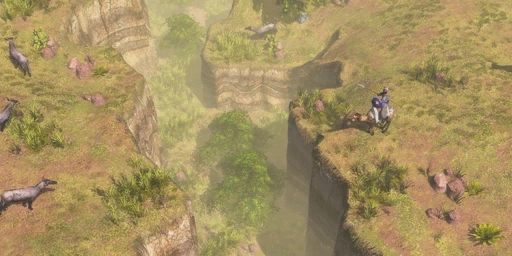
Terrain, routes and neutral sites
- Version
- The Baltic Powers · Definitive Edition
- Terrain
- Icy northern approaches
- Trade Route
- None
- Native settlement
- Inuit
Map character
Reveal the nearby Hunts, Mines, Inuit site and routes between the starting sides before sending Villagers far from the Town Center. Since no Trade Route exists, treat the Inuit alliance and outlaw recruitment as separate choices rather than route-control investments. Keep a compact force near the workers and use normal Experience sources to advance Home City shipments.
What to scout
Secure nearby resources first. Expand toward the Inuit site or an outlaw camp only when the force can protect the Trading Post or recruitment route. Prepare a supported crossing or approach before moving the main army across the map.
Shipment progress without a Trade Route
Nunavut has no Trade Route, so players cannot gain the route’s Experience by claiming and upgrading its Trading Posts. Home City shipments still advance through other Experience sources, but the opening cannot rely on a route stage to accelerate them. Plan the first shipment around Experience from ordinary play, such as constructing buildings, fighting or collecting eligible Treasures. This changes timing rather than disabling the shipment system: the player can still choose cards, but should not schedule an army around a route bonus that the map does not offer.
Keep the Inuit alliance separate from route control
The Inuit settlement is a neutral alliance site, while a Trade Route is a different map feature; the absence of one does not remove the other. A Trading Post at the Inuit site can still be useful if its units or technologies support the army and the location can be defended. Qivittoq and Harpooner outlaws are additional neutral options, but recruitment should fill a real roster need. Compare the distance, resource cost and protection each option requires before splitting workers among multiple sites.
Expand only when the opposite approach can be reinforced
The separated starts make a distant resource or neutral site valuable only if workers can reach it and the army can respond to a raid. Keep a reserve near the home side while scouting the path, then move production or a forward force only after the route is clear. A small group can secure a site while the main army guards workers and the Town Center. If the opponent controls the approach, improve the nearby economy and gather a stronger force rather than sending isolated units across exposed ground.
The Inuit roster has separate Commerce and Fortress timings
An Inuit Hunter is available in the Commerce Age for 60 Food and 50 Wood. It trains in 30 seconds, has 130 hit points and 20% ranged resistance, and attacks at range 16 for 13 damage. Its bonuses are specialized against Pets, Mercenaries, Outlaws and Native warriors, so it can answer some of the map’s neutral forces but should not be assumed to counter every opposing line unit. The Fortress Age Inuit Qamutik costs 110 Food and 110 Wood and takes 35 seconds to train; it has 420 hit points, speed 7.25 and 30% ranged resistance. Its 15-damage attack reaches range 14 and has bonuses against Heavy cavalry, Hand shock troops and Artillery. Choose the Hunter when a target-specific early answer is useful; the Qamutik is a later mobile force that requires the player to reach Fortress Age and still defend the route across the icy map.
Choose an outlaw with the right cost and target profile
Qivittoq and Harpooner recruitment is separate from the Inuit Trading Post. A Qivittoq costs 90 Wood, takes 30 seconds and uses 3 population; it has 111 hit points, speed 6 and a 15-damage ranged attack at range 12, with bonuses against Mercenaries, Native warriors, Pets, Cavalry and Shock troops. It can move quickly between exposed approaches but is fragile under concentrated fire. A Harpooner costs 120 Coin, takes 40 seconds and uses 4 population; it has 210 hit points and deals 20 ranged damage at range 14, with double damage against Cavalry and Shock troops. Its slower speed of 4 makes it better suited to a supported firing position than a long unsupported pursuit. Compare Wood, Coin and population alongside the actual enemy roster before choosing a camp.
Keep shipment timing independent of route control
The absence of a Trade Route removes route-based Experience opportunities, not the Home City shipment system itself. Use combat, building construction and eligible Treasures for Experience, and check whether the neutral investment also helps the army survive long enough to earn its next shipment. Do not delay a necessary defense while searching for a nonexistent route Trading Post. A Trading Post or Tambo at the Inuit site and an outlaw recruitment plan solve different needs: the former opens a settlement roster and technology tree, while the latter adds specific recruits. Claim one defensible objective first, then expand toward a second only after workers and reinforcements can travel safely.