Skull Knight
Skull Knight is an Industrial Age Aztec Heavy infantry unit obtained through the Garland War Ceremony. Its Obsidian Storm is a charged area attack that makes close formations vulnerable.
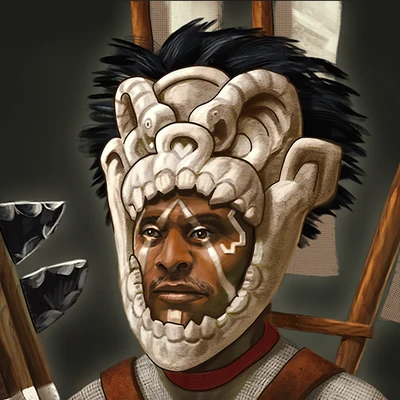
Recorded values
- Cost
- 250 Coin
- Available
- Industrial Age · Community Plaza (Garland War Ceremony)
- Training
- 40 sec · 2 population
- Durability & mobility
- 320 hit points · 20% hand resistance · 4.0 speed · 12 line of sight
- Siege attack
- 72 base damage · range 6 · attack interval 3.0
- Hand attack
- 20 base damage · attack interval 1.5 · area of effect 2 · bonus damage: 3.0x vs. Cavalry; 2.2x vs. Shock troops
- Obsidian storm (charged)
- 30 base damage · range 2 · attack interval 1.5 · area of effect 4 · recharge 15
Role, availability & values
The Skull Knight’s ordinary hand attack deals area damage, and Obsidian Storm expands that effect across its listed area. It also has strong siege damage, making it useful against buildings after the army creates a safe path to contact.
Matchup & timing
Use Skull Knights when they can reach clustered units or a structure without crossing a prepared ranged line. Support their approach with ranged units, and remember they arrive through the Community Plaza ceremony rather than a Barracks queue.
Aztec elite melee unit
The Skull Knight is a unique Aztec Heavy Infantry unit from The WarChiefs. It is slow, has no ranged attack and is obtained through the Garland War Ceremony, Tezcatlipoca Worship or Home City shipments. The current profile has 320 hit points, 20% hand resistance, speed 4.0 and two population. Its hand attack deals 20 damage every 1.5 seconds and strikes nearby units with an area radius of two. It deals 3.0× damage against Cavalry and 2.2× against Shock troops. The 72-point siege attack makes the unit dangerous to buildings after defenders are removed. Its strength is close-range impact, but it must cross the battlefield to use it.
Obsidian Storm and regeneration
Obsidian Storm is automatically triggered during attacks when charged. It delivers 30 hand damage without target multipliers over an area radius of four and recharges every 15 seconds. The attack is based on the Skull Knight's hand damage, so improvements that raise attack also improve the ability; Great Temple of Huitzilopochtli Support increases its area of effect. A Skull Knight also regenerates health while idle: regeneration begins after 3.5 seconds without activity and restores 0.25% of maximum hit points per second. This rewards withdrawing a damaged unit briefly between fights. The ability and regeneration make a surviving group hard to ignore, but neither helps while the unit is exposed to ranged fire on the approach.
Build a formation around its approach
Skull Knights are strongest in numbers because their hand attacks and Obsidian Storm can affect several units at once. A single unit can be focused down before it reaches melee, while a group can punish a packed formation and protect allied troops at close range. Use In Cover mode while crossing enemy ranged fire, then switch to the normal attack stance after contact. Keep the group spaced so Artillery splash does not damage every Knight together. If an opponent has no answer to the advance, the Knights can break a frontline and continue into buildings. Against a prepared army, support is essential: their speed 4.0 and lack of range make a direct march into Artillery or Skirmishers costly.
Pair with Arrow Knights and Coyote Runners
Arrow Knights complement Skull Knights by attacking Artillery from long range, which is important because guns are one of the Skull Knight's clearest threats. Place the Arrow Knights where they can fire promptly without being exposed to enemy Infantry or Cavalry; Skull Knights can protect them if those units close. Coyote Runners add speed and can reach ranged units or Artillery on the flanks while the Skull Knights hold the center. A useful approach is to let the Coyotes scout the edges and bring the heavy melee group forward only when the opponent commits. Do not keep all three unit types in one dense clump, because Artillery can exploit splash damage and the ranged support needs room to fire.
Upgrade progression and sources
The Aztec unit improves automatically through age-related upgrades: Age progression lists Elite Skull Knight (+25% hit points and damage), Champion Skull Knight (+25%) and Legendary Skull Knight (+50%). The exact stage depends on the player's age and the scenario's available progression. Garland War Ceremony trains Skull Knights at the Community Plaza without the listed 250-Coin cost being paid as an ordinary queue purchase. Tezcatlipoca Worship supplies one Knight for every four minutes of game time up to 30 minutes, and Home City cards can ship groups of four to seven. The Warrior politician can also provide Skull Knights to the Aztecs through the Jagiellonian Legacy card, with the shipment size scaling by age.
Technology and allied bonuses
The Skull Knight can benefit from Aztec-specific improvements and some shared technologies. Zapotec Cult of the Dead increases attack by 20%, Carib Kasiri Beer by 10%, Master Lessons by 10% and Yoga by 5%; Mapuche Tactics increases siege attack by 50%. Maya Cotton Armor adds 20% hit points, while smaller health and ranged-resistance improvements can extend its durability. Great Temple of Huitzilopochtli Support is especially relevant because it expands the Obsidian Storm area. Allied shipments and civilizations can create unusual combinations, but those are deck-dependent and should not be mistaken for the unit's baseline profile.
Counterplay and version notes
Light Infantry, counter-skirmishers and Artillery are listed weaknesses. Ranged attackers can damage the Knights while they approach, and their low speed makes it difficult to change direction once they are committed. Use cover stance and terrain, split the advance when artillery is present, and send Arrow Knights or Coyote Runners after the guns. The Skull Knight had 300 hit points before Definitive Edition. Obsidian Storm was added in update 23511, so older WarChiefs guides may describe the unit without that ability. A player comparing the original expansion and Definitive Edition should keep both changes in mind when assessing durability and area damage.
Managing the ceremonial force
The Garland War Ceremony trains Skull Knights automatically, so its output depends on the Community Plaza ceremony rather than an ordinary military queue. This can build a force without repeatedly paying the listed Coin cost, but it also competes with other ceremonies for time. Home City shipments provide a more immediate addition, while Tezcatlipoca Worship delivers Knights as the match continues. Use those sources to replace losses or time a push; the Knights' slow movement means a shipment arriving far from the front may take time to matter. Their two-population cost also leaves room for Arrow Knights or Coyote Runners, which help cover the unit's weak approach against ranged counters.
Choose targets for area damage
The hand attack's radius-two area and Obsidian Storm's radius-four sweep reward engaging enemies that are close together. They can punish a dense group of light units, while the 3.0× Cavalry multiplier threatens mounted troops that enter melee. Against scattered ranged units, the slow approach can be more dangerous than the eventual fight. Use the Coyote Runner to pressure the flanks and make the enemy move toward the Knights, then close when the formation is disrupted. If the opponent keeps its Skirmishers and Artillery at range, use Arrow Knights to force a response before committing the expensive melee group.
Timing the push
Let the ranged support force the opponent to reposition before exposing the Skull Knights. Once the enemy Artillery is threatened or has been driven off, move the Knights into melee and use their area attacks against clustered defenders.
Area damage and cavalry counter in melee
The Skull Knight is heavy melee infantry with high hit points, area-of-effect damage and strong siege against buildings. Its attack bonuses against Cavalry make it a powerful close-combat answer, and the splash can punish units packed together. The Knight resembles the Doppelsoldner and Samurai in these broad roles, but each unit’s exact statistics and access differ. Use Skull Knights when they can reach the enemy formation and strike more than one target.
Low speed makes artillery a serious threat
Skull Knights move slowly, leaving them vulnerable to artillery and ranged units before they reach combat. Pair them with Arrow Knights or other ranged support that can pressure guns, and avoid marching a small group across open ground. Once the front is engaged, their siege damage can help break buildings, but do not sacrifice the unit to a defensive line simply because it has a high hit-point total. Their value comes from safe engagement and area damage, not speed.