The Battle of the Three Kings
1578 — Morocco faces the Portuguese invasion at Alcácer Quibir, the Battle of the Three Kings. The scenario’s defense changes after Sultan al-Malik’s death.
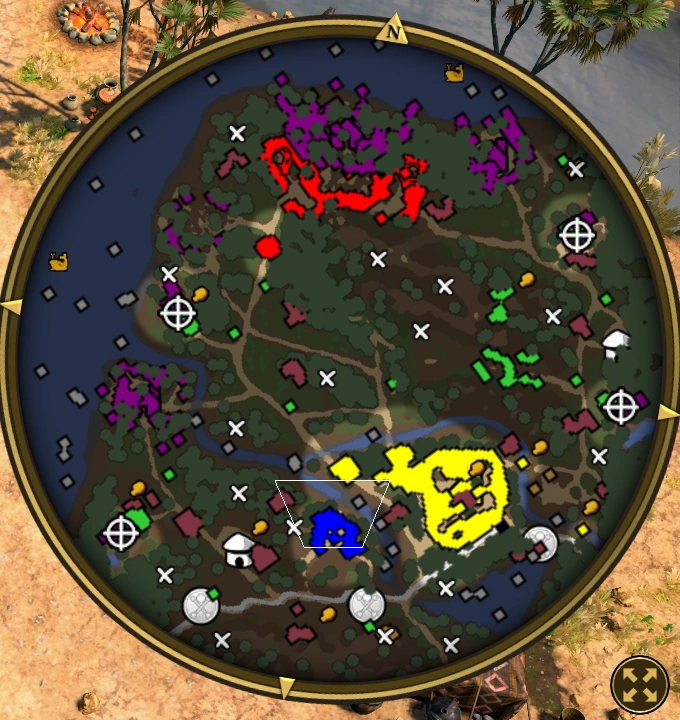
Setting & objective
The required goals are Defend Sultan al-Malik's camp. You will lose if his Town Center is destroyed. (Before the death of al-Malik); Destroy King Sebastian's camp. (After the death of al-Malik); Defend your camp. You will lose if your Town Center is destroyed. (After the death of al-Malik); Convince four of the tribes to join the fight. Optional goals include Destroy Outposts to recapture Moroccan loot; Capture coastal towns to cut off the Portuguese supplies; Capture Sultan Muhammed II.
How to approach it
The mission changes when al-Malik dies: first protect his Town Center and camp, then defend your own Town Center while attacking King Sebastian’s camp and winning the required tribal support. Do not commit every unit to the first assault. Preserve a mobile force for the phase change and secure trade routes or allies that can fund the later push.
Starting situation and changing objectives
The Historical Battle begins in the Commerce Age and ends in the Industrial Age. On Easy or Moderate, Ahmad al-Mansur starts with 200 Food, 200 Wood and 250 Coin; on Hard he starts with half those resources. The initial population limit is 50, and the force consists of Ahmad, ten Bedouin Horse Archers and twelve Tribal Horsemen. Your first task is to defend the camp of Sultan Abd al-Malik, whose Town Center must survive. Later, after al-Malik dies, the objective changes: defend your own Town Center, destroy King Sebastian’s camp and convince four tribes to join the fight. Keeping the allied base alive early matters because it later becomes your main economic center.
Portuguese occupation and allied settlements
The Portuguese have occupied Moroccan tribes and coastal towns and fortified the northern city with two Forts. A Portuguese garrison also controls the central canyon, making the route between the southern camp and northern positions dangerous. The four tribes are not ordinary Trading Post settlements; they must be liberated by defeating their occupying troops, and they supply additional troops and Outpost Wagons. Their Berber Nomads are especially useful because they gather natural resources efficiently. Sultan Muhammed II, a Portuguese-backed pretender, is hidden in the northwestern port city. Reaching him requires clearing his guards; after surrendering, he transfers control of the town and reveals enemy positions, giving the player permanent Line of Sight over the opposing forces.
Use early raids to fund the campaign
The starting army is strong enough to attack nearby Portuguese Outposts and exposed troops. Each destroyed Outpost yields 300 Wood and 300 Coin, which can finance more production or upgrades. Use Ahmad al-Mansur to collect the map’s treasures while the cavalry clears guarded positions; the Marabout Network shipment reveals Trading Posts, treasures, enemy frontier fortifications, Town Centers and Walls. Set rescued Berber Nomads to hunt, chop Wood or mine Coin, then keep the army moving between the liberated tribes and Portuguese outposts. Return to the allied camp when its Town Center is threatened. This opening turns enemy infrastructure and map exploration into the resources needed for a larger army, instead of relying only on the small starting economy.
Secure trade routes and enemy vision
Build Trading Posts at the available Trade Route sites and the free Berber settlements after clearing their defenders. Portuguese Outposts are often positioned near Trade Route sites, so scout before sending Ahmad alone. The map contains seventeen treasures, making exploration a significant source of resources and temporary bonuses. Shipments should usually improve the economy or army before sending extra units, except when an immediate fight requires reinforcements. One ranged unit can approach the easternmost Trading Post site and follow the northern riverbank to reveal the allied Gaia Berber base across the river. That force can raid northern Portuguese positions and later combine with the player’s army.
Free the tribes and coastal towns
Move the starting force through the northern mountain passes to meet the allied Berber troops, then attack the occupied northeastern base. Once that settlement is liberated, turn toward the three smaller port cities along the coast: one in the north and two to the west. Capturing them cuts Portuguese supply income and gives the player useful infrastructure, including Docks. Ships produced there can attack coastal units and gather from fish and whales, adding an economy the southern camp cannot provide. One port city also has a Mosque where Imams can be trained to heal damaged units. Clear the coastal garrisons before investing in naval production, and protect the newly captured towns because they reduce enemy strength while increasing your own.
Manage the transition after al-Malik
During the campaign, the player is notified that Sultan Abd al-Malik has died from illness. His camp then passes to the player. This transition is the major economic turning point: the former allied base can train Villagers and build the standard structures needed for a full army, except that it cannot add more Mosques. Until the handover, protect its Town Center while using Nomads and captured towns to support the force. Afterward, expand production and gather enough resources for the northern assault. The mission has distinct opening and late phases, so avoid spending all available resources on a large army before the base and settlements are under your control.
Assault the northern forts
After freeing the tribes and coastal towns, build a combined force capable of handling the Portuguese canyon garrison and the fortified northern camp. Use the allied Berber army to add numbers and approach the canyon with ranged troops and cavalry prepared for the enemy formation. Once the routes are open, use the full economy inherited from al-Malik’s camp to train units and artillery. The Portuguese northern base contains two Forts; destroying both ends the battle immediately. Protect siege units from the garrison and avoid leaving a captured port undefended while the main army advances. The objective is not to defeat every Portuguese soldier across the map but to break the fortified camp that sustains King Sebastian’s invasion.
Historical background
The scenario is based on the Battle of Alcácer Quibir, commonly called the Battle of the Three Kings because the three monarchs associated with the battle died: Sultan Abd al-Malik, Sultan Muhammad II and King Sebastian of Portugal. Ahmad al-Mansur survived and became Sultan of Morocco. Sebastian’s death without an heir led to a Portuguese succession crisis and a period of rule under the Spanish crown. The campaign condenses these events into a tactical story about defending Morocco, liberating occupied settlements and defeating the Portuguese forts. This context explains why the player’s objectives shift after al-Malik’s death and why the battle centers on Ahmad al-Mansur’s rise.
Shipments, treasures and difficulty
The Moroccan deck supports the early cavalry and later economy. Its cards include seven Tribal Horsemen, six Bedouin Horse Archers, ten Berber Camel Riders for 200 Coin, and Trans-Saharan Trade for 50% more Trade Route resources. Marabout Network helps reveal map objectives; Berber Warfare unlocks Horse Breeding, Barb Horses and Pillage at the Arsenal. Later shipments provide resource crates, Settlers, Culverins and additional cavalry, while Qanats reduces the cost and construction time of Mills, Estates and Livestock Pens. The map also contains seventeen treasures, including a cavalry speed bonus and capturable Goats. Hard difficulty halves the initial resource stockpile, so the player should prioritize Outpost rewards, Nomad gathering and safe treasures before committing to an expensive assault.
Keep pressure coordinated
The main risk is allowing the Portuguese to attack the allied Town Center while the player is chasing treasures or clearing a distant town. Keep a mobile group near the base and use the smaller raiding force to remove Outposts and liberate settlements. Once the northern allies are active, combine them with the player’s force for the canyon and port battles instead of attacking each position with isolated units. The rescued Imams can heal between engagements, while the newly available Docks create a separate source of naval pressure. These advantages are strongest when used together: secure the economy, maintain the alliance network and then concentrate enough siege on the two northern Forts to end the mission.
Protect the captured economy
Keep guards at the liberated ports and Trade Route sites after taking them; they now support both your economy and the final northern assault.
The death of al-Malik changes the mission phase
The battle has a clear before-and-after structure. Before Sultan al-Malik dies, defend his camp and keep its Town Center standing. After his death, the objectives shift to destroying King Sebastian’s camp, defending your own Town Center and persuading four tribes to join the fight. This transition makes it risky to leave the starting camp unprotected while pursuing optional loot or coastal towns. Destroying Outposts can recover Moroccan loot; capturing coastal towns cuts Portuguese supplies; capturing Sultan Muhammed II is another optional target. Decide which side objectives can be secured before the phase changes, and avoid pulling every defender away from the Town Center. The scenario portrays the 1578 Battle of Álcacer Quibir, fought between Morocco and Portugal. It is an African Royals Historical Battle, so its tribal diplomacy and scripted objectives are part of this mission’s rules.
Plan the Moroccan shipments by campaign phase
Berber Warfare unlocks three Arsenal technologies. In the Commerce Age, resource shipments provide 700 Food, Wood or Coin; Settler cards add five or eight workers, while TEAM Mosque Construction opens four Moroccan Mosque technologies. Sa'adi Food Relief reduces Villager Food cost and training time by 25%, and Argan Tree Planting adds a Goat to every shipment from that point onward, including itself. Fortress Age options include two Culverins, eight Andalusian Exiles (Lancers), and Spice Cultivation, which improves several Food gathering sources by 20%. TEAM Qanats reduces Mill, Estate and Livestock Pen costs by 50% and construction time by 75%. Use these cards to match the current need: vision and cavalry early, then economic growth, siege or improved gathering for the final northern assault.