Battle of New Orleans
1815 — The United States defends New Orleans against a British attack in the final phase of the War of 1812.
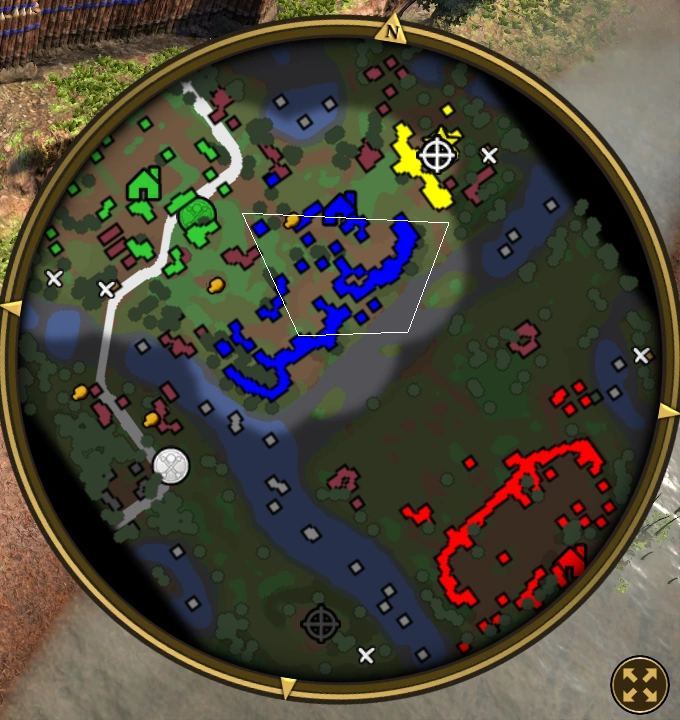
Setting & objective
The required goals are Prepare the defense of New Orleans; Withstand the British attacks; The British must not reach New Orleans; Destroy the British camp. Optional goals include Arm the Choctaw with gunpowder weaponry by bringing one Black Powder Wagon to their settlement; Build a Trading Post in Jean Lafitte's camp (reward: three free shipments); Eliminate the enemy troops guarding the broken Fixed Gun on the Mississippi riverbank.
How to approach it
Scout the target and its approach, then preserve enough of the starting army to finish the required assault. Keep the named demolition unit protected until it reaches the target, then use it only on the obstacle or structure required by the mission. Scout the route before moving the hero or starting force, and avoid splitting units the mission needs together. Take optional objectives when they add useful allies, routes, resources or reinforcements without putting the primary goal at risk.
Starting force and mission shape
This Definitive Edition Historical Battle begins and ends in the Industrial Age. The player starts with approximately 800 Food, 400 Wood and 400 Coin, a population limit of 200, General Jackson, fourteen Volunteers, eight Regulars and a Falconet. The United States base also has its Town Center, Manor Houses, Settlers and a few military buildings. The scenario has two phases: first defend New Orleans through the British assault timer, then advance on the British camp after the attackers lose momentum. The player cannot construct additional Town Centers, Walls or Outposts, so the starting Town Center is the economic anchor and the standing army must cover the approaches.
Primary and secondary objectives
The primary tasks are to prepare New Orleans, survive the British attacks, keep British forces from reaching the city and destroy the British camp. The city’s Town Center is a defeat condition if the British reach it. Three side tasks can make the defense stronger: deliver a Black Powder Wagon to the Choctaw settlement so they can use gunpowder units; build a Trading Post near Jean Lafitte’s camp to gain three shipments; and eliminate the troops guarding the broken Fixed Gun on the Mississippi riverbank. These objectives are optional individually, but each offers a practical advantage: Choctaw support, extra cards or control of a weapon that can oppose the British landing force.
Economy during the defense timer
Start producing Villagers continuously because the scenario does not allow a second Town Center to increase production. Build a Market early and research its available economic improvements, then use shipments that support Mills and Estates before investing in those buildings and their upgrades. The Medicine shipment reduces Villager training cost and time, making it useful for building the economy while the defensive clock is running. A treasure west of the city can rescue two Settlers; the opening gives enough time to clear the nearby bandits before the first attack. The map has fish in lagoons to the north and east, but the player has no Dock, so the main economy must come from land sources and the available starting buildings.
Army composition against British waves
Regulars replace Musketeers and Volunteers replace Skirmishers for the United States force in this scenario. The British attacks are mainly infantry, so Volunteers and artillery are valuable; Cavalry is a less efficient core because Redcoat Musketeers are well placed to meet it. Early waves lack artillery, but later attacks add Falconets and Rockets. Keep mobile Cavalry or Culverins ready to answer enemy guns, remembering that Rockets outrange Culverins. Hold a line of infantry with Heavy Artillery behind it rather than chasing each group away from the city. The attacks can come along three routes and become larger and more frequent, so split the defense into a main line and a reserve that can reach whichever approach is threatened.
Choctaw and Lafitte allies
The Choctaw village lies northeast and has a War Hut and Longhouses. The British often send Cavalry against it; if its War Hut is destroyed, the ally is effectively removed from the battle. A Black Powder Wagon can be trained at the Town Center for 500 Wood and 350 Coin or recovered from the east after defeating Redcoats and two Culverins. Bring it to the settlement to arm the Choctaw. In the west, Jean Lafitte’s camp can be connected to the Trade Route with a Trading Post. That grants three shipments and control of a Saloon where Jaegers, Highlanders and Landsknechts can be hired. Lafitte’s Pirates do not otherwise take part in the fighting, so use the Saloon as a recruitment benefit rather than expecting his force to defend the city.
Fixed Gun and river defense
Later in the defense, the British seize a Fixed Gun near the southern map edge. Capturing it can prevent British warships and transports from landing troops southwest of New Orleans. The gun itself does not attack the player, but a large British detachment and several Falconets guard it from high ground. Use Culverins to remove the Falconets before moving infantry in to capture the position. If the player leaves the gun in British hands, artillery at the riverbank can still destroy the warship and other units can deal with any landing party. The player has no Dock and cannot make a fleet, so the Fixed Gun and land artillery are the available answers to the naval threat.
Survive, then counterattack
The Choctaw eventually withdraw after losing enough troops, even if their village remains standing. As the timer nears its end, expect continuous waves of Redcoats, Hussars and artillery. Keep production running, replace losses, protect the Town Center and avoid sending the entire force away to complete side objectives. Once the timer expires, the British stop launching their former assaults and retreat into their camps. The player can then push forward, clearing the Outposts and remaining troops before destroying the British Town Center. The change in tempo is important: the best moment to attack is after the timed defense is complete, when the enemy no longer has the same stream of reinforcements.
Map and historical context
The battlefield is based on Bayou, with a river to the west and fish-filled lagoons across the north and east. The layout gives the British several land approaches and a southern river landing, while the western Trade Route connects to Lafitte’s camp. The historical battle was the final major engagement of the War of 1812, fought after a peace agreement had already been reached. General Andrew Jackson leads the scenario; the Definitive Edition later named him directly after initially referring to him as the American General. This scenario depicts the defense of New Orleans and is set two years before Act III: Steel.
Stay inside the defensive limit
The player has no Dock, Wall or Outpost construction in this scenario and cannot replace the initial Town Center with a second one. That makes the defense depend on continuous Villager production, a protected economy and a standing army. Send detached troops on side tasks only when the city has enough units to cover the approaches.
Prepare the defenses before the British reach the city
The 1815 Historical Battle asks the player to prepare New Orleans, withstand British attacks, prevent them from reaching the city and eventually destroy the British camp. The opening defense is therefore a timed preparation phase: establish coverage along the approaches, use the riverbank to watch movement and preserve enough troops for the counterattack. Optional support tasks can improve the defense. Bringing a Black Powder Wagon to the Choctaw settlement arms their force; a Trading Post in Jean Lafitte’s camp awards three free shipments; and clearing defenders near the broken Mississippi Fixed Gun can secure that position. Complete the optional tasks only if the city remains protected while the force is away. Once the British assault is stopped, regroup and attack their camp rather than leaving the final objective unfinished. The battle recreates the last major phase of the War of 1812 and depends on keeping the city safe through the enemy approach.