Brahmin
Brahmin is Indians hero in Age of Empires III, available from the Exploration Age; obtained through Town Center. Its listed ability is Claims treasures; Builds Town Centers and Trading Posts; Regeneration.
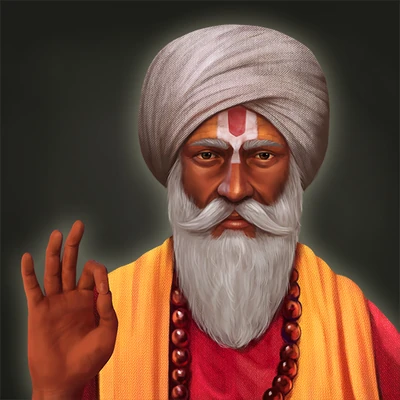
Recorded values
- Cost
- 175 Coin
- Available
- Exploration Age · Town Center
- Training
- 20 sec
- Durability & mobility
- 250 hit points · 20% ranged resistance · 5.0 speed · 18 line of sight
- Healing
- range 12
- Siege attack
- 10 base damage · attack interval 3.0
- Hand attack
- 4 base damage · attack interval 1.5 · area of effect 2 · bonus damage: 3.0x vs. Treasure guardian; 0.5x vs. Hero; 0.25x vs. Villager
- Ability
- Claims treasures; Builds Town Centers and Trading Posts; Regeneration
Role, availability & values
Production is available through Town Center. It has 250 hit points and 20% ranged resistance. It moves at 5.0 speed. Training costs 175 Coin; it takes 20 seconds to train. Attack profile: Healing: range 12. Siege attack: 10 damage; every 3.0 seconds. Hand attack: 4 damage; every 1.5 seconds; area of effect 2. Special ability or role: Claims treasures; Builds Town Centers and Trading Posts; Regeneration. If reduced to zero hit points, it collapses rather than dying; after regenerating 100 hit points, a friendly unit or building nearby can revive it.
Matchup & timing
Keep the Brahmin near the main force when its 12-range healing or treasure work is useful, but use its 5.0 speed and hero recovery rather than letting it take the first hit. It can construct Town Centers and Trading Posts, so a secured forward site may serve both map control and support. Its Stomp and guardian damage are situational tools, not a reason to leave allies unsupported.
Starting hero and core statistics
The Brahmin is the Indian civilization’s mounted Monk in The Asian Dynasties and Definitive Edition. A standard random-map start includes two Brahmins, each treated as an individual unit. They have 250 hit points, 20% ranged resistance, speed 5.0 and line of sight 18. Additional Brahmins cost 175 Coin, take 20 seconds to train at the Town Center and are limited to two. They explore, reveal terrain and claim treasures, while also building Town Centers and Trading Posts. As Heroes, they regenerate and can see stealth. This combination of economic utility and support makes them valuable from the opening, but their limited number means losing one can remove several functions at once.
Healing and support value
A Brahmin heals friendly units at four hit points per second within range 12. This is lower than the ten-per-second rate associated with standard Priests, but it works without a separate healing technology and can restore valuable troops between fights. Improved Healing at the Monastery increases Brahmin healing work rate by 67%; it does not directly improve every Indian unit’s hit points. Healing pays off when damaged units can withdraw and remain alive long enough to recover. Keep the Brahmin behind the army instead of stationary in range of enemy fire. When the force must fight continuously, compare the research investment and recovery time with the value of bringing reinforcements sooner.
Combat and Stomp
The Brahmin’s basic hand attack deals only four damage, with a three-times bonus against Treasure guardians, half damage against Heroes and one-quarter damage against Villagers. It also has a small area effect and can use trample damage. Its Stomp ability can stun nearby enemies when it attacks, giving the Hero a way to disrupt a treasure guard or create a brief opening. This does not make it a frontline Cavalry unit: weak damage against ordinary combat units and its support role make prolonged fights a poor trade. Let combat units occupy the guards, then use the Brahmin’s special attack only when the group can survive contact.
Recovery after defeat
When a Brahmin reaches zero hit points, it collapses instead of dying outright. If a friendly unit or building is nearby, it can revive after regenerating at least 100 hit points. This creates a recovery opportunity, but it is not a reason to leave the Hero in danger: a collapsed unit may be exposed, and recovery takes time. Pull it toward a safe allied position and prevent enemies from finishing it. The mechanic is especially useful during treasure exploration, where a retreat can save a Hero and preserve its building and healing utility. This is special Brahmin behaviour, not a rule for ordinary Indian Cavalry.
Exploration, treasures and map control
Use the two starting Brahmins to scout separate routes, reveal nearby resources and locate Treasure guardians. Their line of sight 18 gives a broad view, while their speed is higher than that of many foot Monks. Treasure claims provide resources or other scenario rewards, and the Brahmin’s guardian bonus helps it assist against weaker guards. For a dangerous treasure, bring military support rather than relying on its four-damage basic attack; a collapsed Hero can recover, but the delay can surrender map control. The Brahmins can also construct Trading Posts and Town Centers, letting them establish key sites while Settlers stay with the main economy.
Favorable Karma and the Pet Tiger
Favorable Karma improves Brahmin hit points and attack by 60% and allows them to train Axehilt the Tame Tiger. A stronger Hero can make treasure collection safer, and the Tiger adds another unit to the expedition. The shipment may be less useful as an opening economic choice than cards that improve resource flow, so weigh the map’s treasures and expected value of enhanced explorers before selecting it. The card unlocks the Tiger training option; it does not automatically produce an unlimited group. Training, population and travel time all matter when judging whether the shipment can influence the next engagement.
Keep the hero useful after the opening
As armies grow, assign the Brahmin to a specific support task: heal a durable group between battles, scout a threatened flank, or help establish a Town Center or Trading Post where Settlers should not travel alone. Its 18 line of sight can reveal approaches, while seeing stealth helps spot units that would otherwise ambush the support line. Do not leave it selected with an army that is ordered to charge; use a separate control group so it stays behind. The two-unit limit means a player cannot replace every mistake with a large Monk force, and its small basic attack remains a poor substitute for combat troops.
Keep support separate from the charge
As a battle begins, place the Brahmin on a separate control group and order it to heal from behind the combat line. This prevents a general attack command from carrying the fragile support hero into the enemy formation. Its value comes from staying alive to heal, scout and help with key buildings, while Stomp is an emergency disruption tool rather than its main job.
Fast monk with trample and Stomp
Brahmins have weak basic combat statistics but gain speed and ranged resistance from their mounted profile. They deal trample damage and have the Stomp ability, which can stun nearby enemy units when it activates. This makes a Brahmin useful for disrupting a formation or supporting other units rather than serving as a conventional heavy cavalry fighter. Use it to create space and help the army engage, then pull it back before it is focused.
Support the army rather than chase kills
A Brahmin’s control effect can interrupt nearby enemies, but its weak basic stats limit how long it should remain in combat. Pair it with units that can exploit the stun and protect it from concentrated anti-Cavalry attacks. Its access and upgrades are tied to Indian or allied options, so check the current roster and unit limit. Treat the Brahmin as support cavalry with a tactical ability, not a replacement for Sowars or Jat Lancers.
Hero abilities and aura interactions
The Brahmin has a targeted Stun ability that can disable a Treasure Guardian from range 16 for 20 seconds; it has a 60-second cooldown. Its passive Stomp becomes available in the Commerce Age in Definitive Edition and gives attacks a 10% chance to stun nearby enemies for 0.8 seconds, doubled to 20% by Crushing Force. With Terror Charge, nearby elephants within radius 24 gain 5% speed; two Brahmins can stack the aura when positioned together. The Dukkha Suffering Home City Card instead slows nearby enemy units by 5% within the same radius, and its effect also stacks when the Brahmins overlap. These effects support an escort or elephant army, but require the correct technology or card and close formation.
Automatic age upgrades
Brahmins improve automatically as the Indian player advances: the Commerce Age gives +50% hit points and damage, the Fortress Age +100%, the Industrial Age +150%, and the Imperial Age +200% from the listed baseline. No separate Monastery research is needed for these age-based changes. The scaling is one reason the hero remains useful beyond early treasure scouting, although its low basic attack and limited training count still make it a support unit. Favorable Karma's additional 60% hit points and attack should be considered with the selected age and current patch rather than mistaken for the unit's unupgraded profile.
Act III: India campaign version
In Act III: India, a Brahmin can be trained at a Town Center. This campaign version can still heal and collect Treasures, but it cannot build Trading Posts; if it dies, the player must train a replacement at the Town Center. Do not assume the skirmish Brahmin's full building utility in that scenario. Protect the campaign hero and use it for healing or Treasure recovery, especially when no normal replacement route is immediately available.