Priest
Priest is Europeans (except Ottomans and Spanish), Japanese (required Dutch allies) special-purpose unit in Age of Empires III, available from the Commerce Age; obtained through Church, Basilica (Italians), Lavra Monastery (Cossack Hetmanate), Cathedral (Peru).
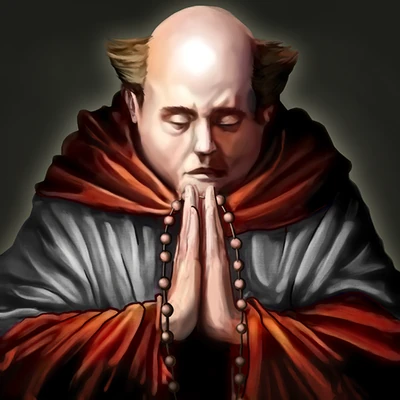
Recorded values
- Cost
- 100 Coin
- Available
- Commerce Age · Church; Basilica (Italians) ; Lavra Monastery (Cossack Hetmanate) ; Cathedral (Peru)
- Training
- 30 sec · 1 population · 10 XP per train
- Durability & mobility
- 200 hit points · 10% ranged resistance · 4.0 speed · 12 line of sight
- Healing
- range 12
- Hand attack
- 5 base damage · attack interval 1.5
Role, availability & values
Production is available through Church, Basilica (Italians), Lavra Monastery (Cossack Hetmanate), or Cathedral (Peru). It has 200 hit points and 10% ranged resistance. It moves at 4.0 speed and uses 1 population. Training costs 100 Coin; it takes 30 seconds to train. Attack profile: Healing: range 12. Hand attack: 5 damage; every 1.5 seconds.
Matchup & timing
The Priest’s 12-range healing is a post-fight recovery tool across the civilizations that can recruit it; check the Church, Basilica or other listed access for the active civilization first. It uses population unlike zero-population healers, so include the slot in a late army. Keep it behind the formation and pull damaged units back into range before the next engagement.
Healing access across civilizations
A Priest is a Commerce Age support unit that heals allied land units for 10 hit points per second at range 12. It costs 100 Coin, takes 30 seconds to train, occupies one population, and has 200 hit points, 10% ranged resistance, speed 4.0 and line of sight 12. Its five-point hand attack every 1.5 seconds is a weak last resort; the Priest should stay behind the army and preserve damaged units. It cannot heal ships, which repair while docked, and it does not convert enemy units in Age III. That differs from priests in other games in the series. Most eligible European civilizations can train or ship Priests through the Church after reaching the Commerce Age. The Ottomans and Spanish use their own healing units instead, while the Japanese can receive Priests through a Dutch Consulate alliance. Italians use the Basilica, the Cossack Hetmanate the Lavra Monastery, and Peru the Cathedral. These buildings and exceptions matter when planning a healing force: a player should confirm both the civilization’s access and the training location rather than assume every Church produces Priests. A Priest can extend the life of expensive units after a fight. Pull injured troops beyond attack range and allow the healer to restore them before returning to the front. Several Priests can treat a group more quickly, but they occupy population and can be killed if the enemy reaches the rear line. Protect them with infantry or buildings and avoid leaving them in the path of cavalry. Healing works best between engagements or while a defended position is quiet; it is not a substitute for combat units during a direct attack. Priests have a current limit of 30 and a one-population cost, so a small support group can fit into many armies. Their 100 Coin price competes with cavalry and upgrades, but the healing can save more resources when it preserves veteran or otherwise costly units. The exact return depends on how often the army can disengage safely. Against concentrated fire that kills units before they retreat, focus on prevention and positioning rather than adding healers. Against a slower battle or defensive map, Priests can restore a force repeatedly and reduce the number of replacements required. Civilizations with a unique equivalent use a different profile and should be looked up separately: Imam for Ottomans, Missionary for Spanish, Warrior Priest for Aztecs, Healer for Haudenosaunee and Lakota, Priestess for Inca, Surgeon for the United States, Abun for Ethiopians, Griot for Hausa and Padre for Mexicans. Asian monks can heal under their own wonder or technology conditions. These names represent related roles, not identical statistics or access rules. The standard Priest entry applies to European and other listed exceptions only.
Keep wounded units alive after withdrawing
Priests are most effective when the army can disengage safely. Select damaged units and move them behind the line until they are no longer taking fire; a Priest can then restore 10 hit points each second within range 12. The healing rate lets a group recover over time without paying to replace every casualty, but a Priest cannot prevent a unit from dying during a focused attack. Protect the healers with a rear guard and move them with the army rather than leaving them at the front of a Town Center push. Because Priests use one population, keep only as many as the army can protect and the resource plan can support. On a defensive map, one or two healers can sustain repeated skirmishes; during a fast attack where units cannot retreat, Food and Coin may be better spent on replacements or counters. The standard Priest belongs to a broader family of healing units, each with its own access and profile. The Spanish Missionary can move with cavalry, the Aztec Warrior Priest works through its civilization’s systems, and the Surgeon is associated with the Field Hospital. Asian Monks may need a wonder or a technology before healing is available. The Priest itself does not heal ships, does not convert enemies and has only a five-damage attack. Use the Dock to repair ships and choose a civilization-specific healer when the standard Church route is unavailable. Its present 200 hit points and 30-unit limit differ from older versions, which listed more health, higher cost and slower training; the current rate and cap should be used when following older healing strategies.
Healing support and garrison behavior
Priests are support units that heal friendly troops. It can be garrisoned in the same defensive buildings as Villagers and contributes to the garrison count. The Priest’s own attack is a weak unarmed strike, so its value comes from healing and supporting a force rather than dealing damage.
Keep the healer behind the army
A Priest should stay close enough to heal injured units but outside the enemy’s front line. Use a safe retreat path and garrison it during a raid, then return it to the army after danger passes. Do not rely on it to stop an attack or defeat a unit on its own. Civilization-specific healers such as the Padre, Warrior Priest or Priestess have additional abilities and should be read on their own pages.