Akbar the Great
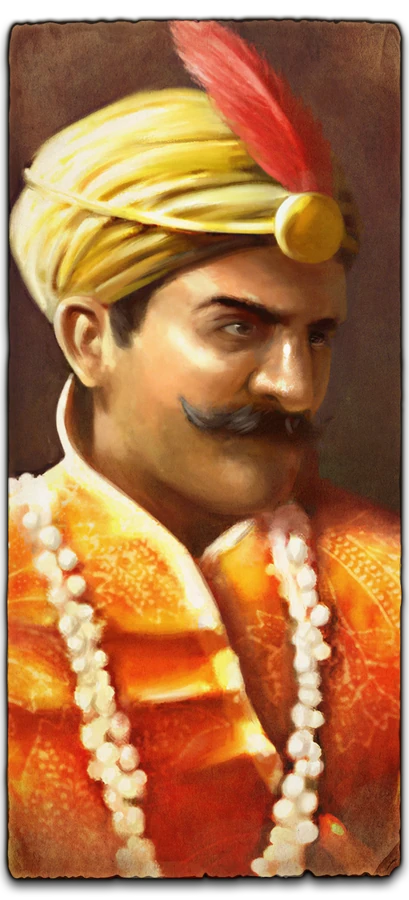
Akbar the Great is the Indian Skirmish AI personality in Age of Empires III: The Asian Dynasties. The profile combines Mughal-themed dialogue with a recurring army plan built around Indian Infantry, Elephant support, Consulate troops and a fortified economy. These are AI tendencies, not special bonuses attached to a unit or playable Akbar hero.
AI identity & army profile
His usual core is Gurkhas and Sepoys, with smaller numbers of Howdahs and Siege Elephants because Elephants consume substantial population. He may use Mansabdar versions while the Charminar Gate is available and often chooses British Consulate support for Falconets. Intact Wonders enable Inspiration and Cease Fire.
How to prepare
When facing Akbar, scout his Consulate, Wonder and first military buildings before choosing counters. Protect Artillery from Elephants and Cavalry, answer the Infantry core with anti-Infantry units, and pressure outer resources before attacking a layered base. As his teammate, help him survive early pressure and coordinate around his slower army buildup.
Personality and historical identity
The AI is named for Jalal-ud-din Muhammad Akbar, the Mughal ruler whose reign lasted from 1556 to 1605. The game presents him as patient, diplomatic and respectful, while making clear that he will use force to defeat an opponent. He may express remorse over damage to Trading Posts or speak of the welfare of his people; this tone is characterization, not a promise that his army will avoid attacking. His historical biography and dialogue give context to the skirmish opponent, but do not create a campaign storyline or unit bonus.
Infantry forms the center of his army
Akbar commonly trains Gurkhas and Sepoys in large numbers and uses them as the main body of the force. These two lines create sustained Infantry pressure, while other units appear as support rather than an equal share of the army. A player should scout the actual mix before choosing counters: Gurkhas and Sepoys are the predictable core, but the supporting roster can change with the map, age and available buildings. Do not infer exact numbers from the AI name or its opening dialogue; the game adjusts composition to match the match state.
Elephants, Mansabdars and population cost
Howdahs and Siege Elephants give Akbar powerful mounted and siege options, but their high population cost usually keeps their numbers lower than the Infantry core. When the Charminar Gate remains intact, he may support those units with Mansabdar variants. This means a small Elephant group can still demand a dedicated response, especially if it arrives behind Gurkhas and Sepoys. Keep anti-Elephant or anti-Cavalry units available and avoid letting the Elephant line reach vulnerable Artillery or buildings without screening.
British Consulate support covers a roster gap
Akbar frequently uses the Consulate to obtain foreign units and often selects British support for Falconets. The guns fill a weakness in his normal Indian army's access to conventional Artillery and make an Infantry mass more dangerous against an opposing ranged line. If Falconets appear, attack them with Cavalry or other suitable anti-Artillery units while keeping the rest of the army from surrounding your counter. Check the Consulate choice in the current match rather than assuming that every Akbar army contains the same foreign support.
Wonder abilities change the timing of fights
When the Tower of Victory is intact, Akbar can use Inspiration; the Taj Mahal enables Cease Fire. He tends to activate available powers as soon as possible instead of saving them for an ideal battle. Watch for the effect and avoid committing the entire army into a fight that has just been interrupted. Cease Fire can temporarily stop combat, so keep an alternate route or objective available and resume pressure when the effect ends. Wonder destruction removes the corresponding access, making these structures meaningful strategic targets as well as parts of his defensive layout.
Economy and defensive construction
Akbar maintains an average economy and typically advances at a pace similar to other skirmish AI personalities. He often places Rice Paddies near Town Centers and protects the economic core with Castles, Barracks and Caravanserais. This layered arrangement makes a direct raid into the center costly, but it does not remove the need to gather from outer resources. Pressure exposed Mines, Trade Posts and routes between the base and the front; forcing defenders to leave the central structures can slow his growth more effectively than attacking the strongest point first.
How to fight him as an opponent
Scout his first buildings and age-up Wonder, then prepare for a mixed force rather than a single counter. Anti-Infantry units can reduce the Gurkha and Sepoy mass; Cavalry can threaten Falconets, but must avoid charging through protected Infantry or Elephant support. Focus fire on one dangerous target instead of spreading damage. If Akbar commits to Elephants, hold an anti-Elephant response behind the frontline and protect Artillery from their approach. Early pressure on gathering sites can delay the population-intensive army before it assembles around the base.
Working with Akbar as an ally
As a teammate, Akbar can contribute a substantial Infantry force and Elephant support, but he may build up more slowly than an early-rush ally. Use mobile troops or Artillery to contest the opening and create space for his economy. Once his Gurkhas, Sepoys and Consulate units are ready, coordinate one attack rather than advancing in separate groups. He can exchange resources, react to requests and comment on age advancement, so resource support can help him reach the army he is preparing. His courteous dialogue should be read as personality, not as a reliable signal that he will begin an attack.
Map and difficulty affect his options
The roster depends on the match's map, accessible settlements and available production. Native alliances, Consulate access, water and nearby resources can all change his timing and support units. Difficulty affects how quickly he gathers and advances, while scenario rules can restrict options that exist in a normal skirmish. Treat the listed behavior as a recurring profile, not a fixed build order or guaranteed unit count. Scout the actual Town Centers, Wonders, Consulate and military buildings to identify what the AI can field in this particular game.
Keep the AI separate from the civilization and campaign
Akbar is a skirmish personality layered over the Indian civilization; his historical comments do not grant a separate bonus or reveal a scripted mission plan. Indian Villager, Rice Paddy, Wonder and Consulate rules belong to the playable civilization and should be checked on their own pages. Likewise, Act III: India has its own characters and scenario objectives. This distinction helps explain why a skirmish Akbar may build a familiar Indian base while campaign missions use a restricted or scripted force.
Dialogue follows ally and enemy interactions
Akbar's lines respond to match events rather than describe a fixed story. As an ally, he acknowledges whether the players cooperated or fought before, comments when a teammate reaches a new Age, and can ask for or offer Food, Wood and Coin. Other exchanges concern Trading Posts, shared strategies, attack requests, major battles and the start or outcome of a Trade Monopoly. As an enemy, he reacts to Treasures, resource discoveries, Trading Posts, Age advancement, finding a Town Center and the start of combat. Some lines express regret over civilian harm or frame conquest as a reluctant necessity. These reactions reinforce his diplomatic persona, but requests and remarks do not change resource rules, unit statistics or the AI's underlying strategic priorities.
Historical background and in-game interpretation
Akbar was a Mughal ruler who expanded the empire during a long reign and is remembered for patronage of art, administration and a policy that incorporated regional leaders, including Rajput nobles, into imperial government. He also sponsored discussions among religious scholars at the Ibadat Khana and promoted Din-i-Ilahi, a small syncretic belief system associated with his court. The game draws on this reputation for pluralism in the AI's patient, conciliatory dialogue, but its religious presentation is simplified: the historical Akbar was Muslim, and Din-i-Ilahi did not mean that he adopted a polytheistic faith. Keep the character's game dialogue distinct from the more complex historical figure and from the scripted events of Act III: India.
Early rule and imperial administration
Akbar succeeded Humayun as a child and initially ruled under a regent, whom he dismissed in 1560 when he was eighteen. He expanded Mughal control into Afghanistan and Baluchistan and across much of northern India, but also integrated conquered Rajput leaders into the administration. His courts at Delhi and Agra became centers of government and culture. These historical details explain the combination of imperial ambition and conciliatory language used by the game's AI personality; they do not describe a separate campaign mechanic.