Conquistador
Conquistador is ranged cavalry in Age of Empires III, available from the Commerce Age; obtained through Trading Post or Tambo on a Jesuit Mission settlement, Native Embassy.
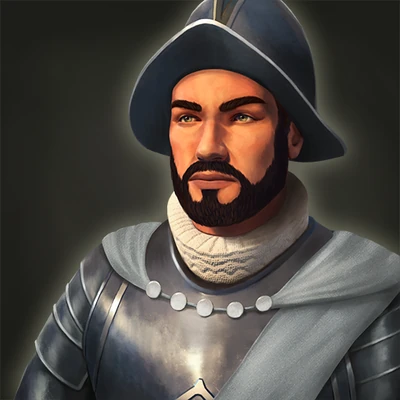
Recorded values
- Available
- Commerce Age · Trading Post or Tambo on a Jesuit Mission settlement; Native Embassy
- Training
- 35 sec · 16 XP per train
- Durability & mobility
- 180 hit points · 30% ranged resistance · 7.25 speed · 15 line of sight
- Hand attack
- 10 damage · 1.5 attack interval · bonuses: 3.0x vs. Heavy cavalry; 2.25x vs. Hand shock trooper; 2.0x vs. Artillery
- Ranged attack
- 18 damage · 12 range · 3.0 attack interval · bonuses: 3.0x vs. Heavy cavalry; 2.25x vs. Hand shock trooper; 2.0x vs. Artillery; 0.5x vs. Villager
- Siege attack
- 14 damage · 6 range · 3.0 attack interval
Role, availability & values
Production is available through Trading Post or Tambo on a Jesuit Mission settlement or Native Embassy. It has 180 hit points and 30% ranged resistance. It moves at 7.25 speed. Training costs 80 Food and 80 Coin; it takes 35 seconds to train. Attack profile: Hand attack deals 10 damage. Ranged attack deals 18 damage. Siege attack deals 14 damage. Hand attack bonuses: 3.0× against Heavy cavalry, 2.25× against Hand shock trooper, and 2.0× against Artillery. Ranged attack bonuses: 3.0× against Heavy cavalry, 2.25× against Hand shock trooper, 2.0× against Artillery, and 0.5× against Villager.
Matchup & timing
The Conquistador brings ranged-cavalry counter damage into the Commerce Age for civilizations with access to a Jesuit Mission Trading Post or Tambo, or a Native Embassy. Its 180 hit points, 30% ranged resistance and 7.25 speed support scouting and repositioning; the 80 Food and 80 Coin cost is paid for each unit. Its hand and ranged attacks have 3× against Heavy Cavalry, 2.25× against Hand shock troops and 2× against Artillery, but only 0.5× against Villagers. Use it to threaten those military counters from range, then pull away from infantry or other screens that can trap it. Check the settlement or Embassy roster before planning a build around it.
Commerce Age ranged cavalry profile
The Conquistador is a Commerce Age ranged Cavalry Native warrior from The Asian Dynasties, trained through a Trading Post or Tambo on a Jesuit Mission settlement, or at a Native Embassy where access exists. It costs 80 Food and 80 Coin, trains in 35 seconds and is limited to 12 per settlement. It has 180 hit points, 30 percent ranged resistance, speed 7.25 and sight 15. Its rifle attack deals 18 damage at range 12 every three seconds, with a radius-one area effect. It deals three times damage against Heavy Cavalry, 2.25 times against Hand Shock troops, twice against Artillery and half damage against Villagers. Its hand attack deals 10 damage with similar anti-Cavalry multipliers, and its siege attack deals 14 damage at range six. The combination of mobility, early availability and class bonuses makes it useful against a Commerce Age cavalry rush, but its shorter range and lower health than a Dragoon require careful positioning.
Early pressure and target priority
Conquistadors can pressure exposed Villagers, especially hunters away from the Town Center, while their speed lets them leave before a slow Infantry force responds. Their ranged attack is designed for Heavy Cavalry, Hand Shock troops and Artillery, and the small area effect adds damage when units stand close together. Against a cavalry rush, focus fire on the most dangerous Heavy Cavalry rather than spreading shots across the group. Against Artillery, use their speed to approach from a safe direction and retreat if the enemy screen blocks the route. Their 30 percent ranged resistance helps them survive return fire, but does not make them durable against concentrated attacks. They are also useful against Hussars and Pikemen when both are grouped, but the unit should avoid Light Infantry that can punish ranged Cavalry. A screen or allied anti-Infantry force makes it safer to exploit its early timing.
Jesuit rank upgrades and civilization access
Jesuit Veteran Training upgrades Conquistadors to Veteran with 25 percent more hit points and damage. It costs 100 Wood and 75 Coin in Definitive Edition, compared with 200 of each before that edition. Jesuit Guard Training requires Veteran, costs 400 Wood and 300 Coin, and adds 35 percent in the current version compared with 40 percent earlier. Legendary Native Warriors or Exalted Natives provides another 50 percent native hit point and damage improvement where available. European civilizations and Mexico use the Capitol route, the United States the State Capitol, and Asian or Native American civilizations a Town Center route; African access can use Influence and may vary from ordinary resource costs. These upgrades support the Conquistador’s continued usefulness beyond its early timing, but its per-settlement limit remains. The unit is a native option rather than a standard stable Dragoon, so secure the Jesuit Mission before planning a continuous army.
Ranged Cavalry Caracole and range control
Ranged Cavalry Caracole improves the Conquistador’s range and can enable hit-and-run attacks against Infantry that would otherwise answer a light Cavalry unit. The additional reach helps it fire while moving around enemy Musketeers or foot archers, but the normal range is 12 and the attack interval remains three seconds. Do not treat a range bonus as permission to stand still under fire. Move between volleys, focus on targets with the correct class multiplier and preserve enough space to retreat. The Conquistador is especially valuable for civilizations that lack a conventional light ranged Cavalry unit in the Commerce Age, because it can fill that role before Fortress Age units appear. The Jesuit cap, site availability and upgrade costs determine whether the force can be sustained into later Ages.
Current and earlier statistics
Several balance changes affect comparisons with older guides. Before update 14.3853, the Conquistador cost 85 Food and 70 Wood; the current unit uses 80 Food and 80 Coin. Its train time was 30 seconds before Definitive Edition and is now 35 seconds. Update 14.43676 reduced its ranged attack from 19 to 18, while update 14.3853 added the radius-one area effect and increased siege damage from nine to 14. Its Hand Shock troop multiplier was 2.75 before Definitive Edition and is 2.25 now. Use the current costs and values when evaluating the unit against a Dragoon. The native settlement cap is 12, so a large group may require additional sites or Home City access rather than a single production point.
Composition and counterplay
A Conquistador force works best alongside units that can hold Heavy Infantry and Light Infantry away. It can damage Artillery and Heavy Cavalry, but an opponent can protect those units with Skirmishers, anti-Cavalry Infantry or a Town Center. Use the Conquistador’s speed to choose a flank, then retreat when its counters arrive. Its siege attack is modest, so do not use it as a primary structure destroyer. When the opponent has no valuable Cavalry or guns, a standard Dragoon, Crossbowman or another unit may spend the same resources more efficiently. The unit’s advantages come from early availability, ranged resistance and targeted multipliers, not from being superior in every matchup.
African civilization cost and role
African civilizations pay 145 Influence for a Conquistador rather than the standard Food and Coin combination. That changes when the unit fits into an African army: it competes with Influence purchases and age-up plans rather than ordinary resource production. Its access still depends on a Jesuit Mission or available Native Embassy route, and its limit is 12 per settlement. Because it appears in the Commerce Age, it can fill a mobile anti-Cavalry role before later-age units arrive. Protect the settlement and choose targets carefully so the Influence investment removes valuable Heavy Cavalry or Artillery rather than being traded for low-cost Infantry.
Area attack and attack upgrades
The radius-one splash added in update 14.3853 makes clustered targets more favorable than they were in earlier versions. A group can damage tightly packed Cavalry or Infantry with each rifle volley, while its 18 base damage and three-second interval still reward focus fire. Native rank improvements and Ranged Cavalry Caracole can increase the unit’s survivability and range, but the Jesuit site limit remains. Keep Conquistadors far enough from enemy Light Infantry to preserve their firing time, and use the splash to punish units that bunch while pursuing your ranged line.
Home City support and map dependency
Native Warrior shipments can deliver Conquistadors when the player has access to a Jesuit Mission, and several native combat cards can improve the unit’s hit points or attack. The exact shipment availability differs among European, Asian, African and Native American civilizations. A Home City shipment can provide a small force before local training is ready, but it does not change the 12-unit settlement limit. If the map has no Jesuit Mission, a Native Embassy or civilization-specific access is needed. This map dependency is the main distinction from a standard Dragoon, which a European civilization can usually train from a Stable once it reaches the appropriate Age. Check site access before shaping the opening around Conquistadors.
A measured Dragoon comparison
The Conquistador arrives in the Commerce Age and costs 160 total resources, while a Dragoon is a later-age standard unit with a different resource mix and upgrade path. The native unit has 180 hit points, 30 percent ranged resistance, speed 7.25 and range 12, so it trades durability and reach for earlier availability and a lower overall cost. Its large Heavy Cavalry multiplier makes it a timely response to cavalry-heavy openings. It also deals less damage and has lower health than a Dragoon according to the source comparison. Use it to cover the early timing gap, then decide whether to upgrade the native force or transition into standard ranged Cavalry.
Using the unit without a stable
A Jesuit Mission Trading Post can give a civilization ranged Cavalry before its normal stable roster reaches that role. This is particularly useful when the opponent opens with Heavy Cavalry or Artillery and the player needs a mobile answer in the Commerce Age. The Conquistador’s range of 12 is shorter than some later ranged Cavalry, but speed and ranged resistance help it choose when to engage. Keep it in small groups, focus valuable targets and transition to another unit once the opponent fields strong Light Infantry. The native force should complement the civilization’s regular army rather than delay all other production.
Managing the Jesuit production site
Because the Conquistador is attached to a Jesuit Mission settlement, the training point can become a contested strategic location. Place the Trading Post where the army can defend it and avoid spending the full local limit before deciding how the force will be used. A Native Embassy can provide an alternative production route for eligible civilizations and is useful when the settlement is too far forward. The native unit’s value is greatest when it arrives before the opponent’s standard ranged Cavalry and upgrades; if that timing has passed, compare its rank and cost with a later Dragoon.
Early light ranged cavalry
The Conquistador is light ranged Cavalry similar to a Dragoon but available earlier in the Commerce Age for the civilizations that can access it. It costs less and has lower hit points and slightly lower attack in the documented comparison. That early availability can help a civilization without another light ranged Cavalry unit respond to a cavalry-heavy opening. Use it to pressure mounted targets and reposition quickly, but do not expect it to match a fully upgraded Dragoon in durability.
Choose an early counter before the opponent adapts
Conquistadors are useful against Cavalry and can create a mobile response before later unit tiers are available. They remain vulnerable to light infantry and artillery, so pair them with Heavy Infantry and avoid a prolonged fight against Skirmishers. African civilization profiles can have distinct costs, so check the unit’s version and faction before comparing resource efficiency. If the opponent shifts away from Cavalry, transition the army into a unit type that answers the new composition.