Mounted Infantry
Mounted Infantry is Heavy cavalry in Age of Empires III, available from the Commerce Age; obtained through Trading Post or Tambo on a House of Habsburg palace, Native Embassy. Its listed ability is Scout Promotion.
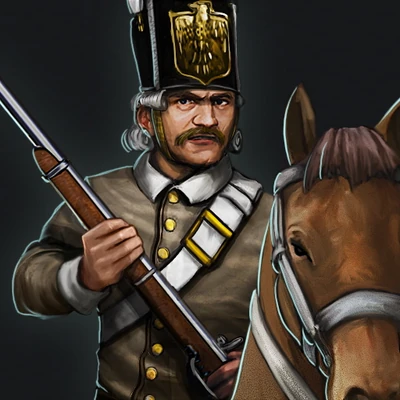
Recorded values
- Available
- Commerce Age · Trading Post or Tambo on a House of Habsburg palace; Native Embassy
- Training
- 35 sec · 16 XP per train
- Durability & mobility
- 220 hit points · 15% ranged resistance · 6.25 speed · 18 line of sight
- Hand attack
- 8 damage · 1.5 attack interval · bonuses: 3.0x vs. Infantry
- Ranged attack
- 14 damage · 4-12 range · 3.0 attack interval · bonuses: 2.0x vs. Infantry
- Siege attack
- 9 damage · 6 range · 3.0 attack interval
- Trample attack
- 4.67 damage · 2.0 attack interval · bonuses: Same as hand attack
- Ability
- Scout Promotion
Role, availability & values
Production is available through Trading Post or Tambo on a House of Habsburg palace or Native Embassy. It has 220 hit points and 15% ranged resistance. It moves at 6.25 speed. Training costs 120 Food and 40 Coin; it takes 35 seconds to train. Attack profile: Hand attack deals 8 damage. Ranged attack deals 14 damage. Siege attack deals 9 damage. Trample attack deals 4.67 damage. Hand attack bonuses: 3.0× against Infantry. Ranged attack bonuses: 2.0× against Infantry. Special ability or role: Scout Promotion.
Matchup & timing
Hand attack is especially effective against Infantry (3×). Ranged attack is especially effective against Infantry (2×). Use ranged fire to focus Infantry before they can close; hold the melee attack for Infantry when they enter contact. Keep a frontline between this unit and threats that can reach it safely.
Two forms and their exact battlefield tradeoffs
Mounted Infantry is a Commerce Age ranged heavy cavalry unit from the Knights of the Mediterranean content. It costs 120 Food and 40 Coin, trains in 35 seconds, has a limit of 11, uses no population in its native version, and begins with 220 hit points, 15 percent ranged resistance, speed 6.25 and sight 18. Its mounted ranged attack deals 14 damage at range 4 to 12 every three seconds, with a 2 times multiplier against Infantry. Its melee attack deals 8 damage every 1.5 seconds and has a 3 times multiplier against Infantry. This combination lets the unit pressure infantry while retaining cavalry movement. Dismounting changes its role rather than simply improving every statistic: the infantry form has 145 hit points, speed 4.25, sight 22 and range 2 to 19, while retaining a 14 damage ranged attack. It gains 2.75 times damage against Heavy Infantry, 2.5 times against Light Ranged Cavalry and Ranged Shock troops, and reduced damage against Cavalry and Shock troops. It is consequently better at holding distance and fighting those infantry counters, but easier to kill with artillery and cavalry. The transition takes four seconds and leaves the unit vulnerable during the animation. Do not issue the switch after enemies have already reached the group; choose the form before contact, then protect the temporary pause.
Promotion ranks and civilization access
Mounted Infantry gains Scout Promotion ranks by defeating enemy military units. Bronze adds one maximum range and five percent speed, Silver adds two range and ten percent speed, and Gold adds three range and fifteen percent speed. The range and speed benefit follows the unit between mounted and dismounted forms, and its rank is retained when it changes form. Cavalry cards such as Ranged Cavalry Caracole or Comanche Mustangs and infantry cards such as Schützenfest or Military Drummers can further affect the matching mode. Standard access is through a Trading Post or Tambo built on a House of Habsburg palace, with an 11 unit limit. Germans have a separate route: after the Prince-Electors Home City card and choosing the House of Habsburg, their Native Embassy can train it. This German version uses one population, has a limit of 17 and can be upgraded to Veteran and Royal Guard. Revolutionary France can receive units through Sister Republics, so that shipment route should not be confused with repeatable training. Age upgrades include Veteran Habsburgs for 125 Wood and 125 Coin, adding 20 percent hit points and damage; Royal Guard Habsburgs for 350 of each resource, adding 40 percent after the Veteran upgrade; and Imperial native upgrades for 1,500 Food and 1,500 Wood, adding 50 percent. Exact access depends on civilization and release.
Choosing a form for each opposing unit
Use the mounted form against ordinary Light Infantry and rifle units when mobility matters: unlike Light Ranged Cavalry, the mounted unit does not carry that classification and therefore avoids the extra damage those counter-skirmisher units are designed to inflict. Its mounted attack also retains a useful infantry multiplier. Against Heavy Infantry, the dismounted form has the stronger ranged multiplier and can attack from longer range. Dismounted troops are also more effective against Light Ranged Cavalry and Ranged Shock units, but their 145 hit points and slower speed make positioning important. Heavy Cavalry and other hand cavalry threaten either form because the unit has no special protection against a cavalry dive; use a separate screen or switch to the faster mounted form before the pursuers connect. Enemy Dragoons are particularly dangerous because they are faster and receive bonuses against Heavy Cavalry. Artillery punishes the infantry form, while the mounted form has no artillery bonus and can retreat more quickly. Against Musketeers, either form can contribute, but dismounted attacks gain a large Heavy Infantry multiplier, especially when Counter Infantry Rifling is present. Mounted groups pair well with Light Cavalry for a fast raiding force that can threaten both cavalry and infantry, while a mixed army is safer if the opponent has artillery or a dedicated anti-cavalry unit.
Use the transition deliberately
The Dismount ability takes four seconds, and the Mount action has the same vulnerability window. This makes the animation a tactical commitment: start it before an enemy formation is in firing range, or wait until friendly troops have forced the enemy back. In the mounted state, the unit has more hit points and speed, while its ranged attack has a shorter maximum reach. Mounted speed helps it move between fights and disengage from slow melee infantry, but its 15 percent ranged resistance and heavy cavalry classification still make dedicated anti-cavalry fire dangerous. When the target is a rifle line or light ranged cavalry group, dismounting grants the longer reach and class multipliers needed to contribute as a Skirmisher. Keep the group together during the switch so part of the force does not become vulnerable while the rest is already fighting. If only some units change form, select and manage them carefully; mixed forms can have different movement speed, sight and target priorities. Once the threat changes, mount again while the retreat is protected. Promotion range and speed improve either form, but they do not remove the time spent transforming or the resulting period of exposure.
Trading Post investment and army combinations
A House of Habsburg palace is the access point for the standard alliance, so the choice carries a map cost as well as a unit cost. A Trading Post or Tambo at that site unlocks training, but each unit still costs 120 Food and 40 Coin and takes 35 seconds to replace. Compare that investment with other units available from the same route and with the civilization units that your army already fields. Mounted Infantry can accompany Light Cavalry in a mobile force because it threatens infantry while cavalry pressures artillery or exposed workers. In a larger battle, pair dismounted units with a durable front line that keeps Heavy Cavalry away and lets the rifles use range 19. Their attack bonuses against Heavy Infantry make them a possible answer when a slow melee unit tries to break through, but they should not be asked to hold contact indefinitely. Cavalry and Shock troops receive reduced ranged damage from the dismounted form, and the mounted unit can still be overwhelmed if it stays in range of enemy Dragoons. Use scouts and the main army to choose engagements rather than relying on the unit sight alone. Repeatedly replacing a small number of losses can be expensive; preserve trained and promoted units instead of sending them into a fight merely because the local limit has room.
Version and balance notes
This unit belongs to Age of Empires III: Definitive Edition and the Knights of the Mediterranean expansion. It is not part of the original Age of Empires III, The WarChiefs or The Asian Dynasties baseline. The House of Habsburg route and the later German Prince-Electors access should therefore be read as Definitive Edition content. Native warrior upgrades also depend on the civilization and selected version: European civilizations use the Capitol for Legendary Native Warriors, the United States has a State Capitol, while other civ groups use their own native upgrade route. The unit statistics on this page describe the current listed profile; promotion ranks and civilization upgrades can raise its effective range, speed, hit points or damage. Keep those later bonuses separate from the base attack values when comparing it with a Dragoon or a standard Skirmisher.
Upgrade choices change the time to field a veteran force
The named Habsburg upgrades are a substantial resource commitment. Veteran Habsburgs costs 125 Wood and 125 Coin and adds 20 percent hit points and damage to Mounted Infantry. Royal Guard Habsburgs costs 350 Wood and 350 Coin, requires the Veteran upgrade and raises the bonus to 40 percent. The Imperial native upgrade costs 1,500 Food and 1,500 Wood and lists a 50 percent hit point and damage increase. Decide whether the army will keep these units in service long enough to recover the research cost. A promotion rank earned in battle is separate from the purchased Veteran or Royal Guard status: one improves range and speed, while the age upgrade increases durability and damage. Both can matter, but neither makes the dismounted form safe against artillery. European civilizations and Mexico access Legendary Native Warriors through the Capitol, the United States through the State Capitol, Asian and Native American civilizations through their Town Center as Exalted Natives, and Poles have their own Sejm technology. African native warriors have an automatic free upgrade system. The exact building and technology name are civilization-specific.
Practical sequence for a mixed engagement
Before the fight, decide whether the formation is traveling or preparing to fire. Travel mounted when it needs speed, hit points and a quick retreat. If the enemy line contains Heavy Infantry or Light Ranged Cavalry, move to a safe firing position and dismount before entering range. The dismounted form can shoot out to 19, but moving at 4.25 speed makes it harder to chase a retreat. Use the army front to keep cavalry away while the rifles exploit their multipliers. If Dragoons or another anti-heavy-cavalry unit appears, withdraw and remount only after the screen creates space; do not attempt a four-second transformation under direct pressure. If the target changes to ordinary Light Infantry, mounted status avoids the Light Ranged Cavalry counter classification and restores speed for flanking. A small number of promoted units can contribute more reliably than an unsupported mass, since their range and speed accumulate through kills but remain vulnerable to a bad engagement.
Check the selected settlement before training
A Trading Post at the Habsburg palace is a meaningful map investment, so confirm that the site is accessible and defensible before committing the army to Mounted Infantry production. The German and revolutionary routes bypass that standard access but have their own card and civilization requirements. A settlement limit, age upgrades and promotion ranks all affect the practical value of the force; none should be assumed universal across every civilization.
A flexible unit with a defined counter role
Mounted Infantry is most valuable when its two modes answer different problems during one battle. The mounted form can move with cavalry, protect a flank and avoid the Light Ranged Cavalry classification that exposes many counter-skirmishers. The dismounted form gives the army a long-range rifle with high bonuses against Heavy Infantry and Light Ranged Cavalry. A commander can therefore reposition quickly, then establish a screened firing line when the target composition is known. That flexibility has real costs: each switch takes four seconds, reduces or increases speed depending on direction, and exposes the unit during the change. Form choice should follow scouting rather than an improvised reaction after contact. Promote surviving units through combat where possible, since their rank increases both range and speed in either mode. Pair them with a separate answer to Cavalry and artillery, preserve the group when targets retreat, and account for the House of Habsburg access requirement or the relevant German card before planning a production timing.
Preserve veteran units
A promoted survivor retains its rank when mounting or dismounting, so protecting experienced troops preserves the range and speed gained through earlier battles.
Habsburg mounted unit that can dismount
Mounted Infantry are Commerce Age ranged Cavalry tied to a House of Habsburg palace. A Trading Post or Tambo on the palace, or a Native Embassy, provides access. Each costs 120 Food and 40 Coin, takes 35 seconds to train and the recorded limit is 11. It has 220 hit points, 15% ranged resistance, speed 6.25 and uses the Habsburg profile’s single population space. Its ranged attack deals 14 damage at range 4–12 every three seconds, with 2× damage against Infantry; its hand attack also has a 3× Infantry multiplier. This makes the mounted form useful for pursuing and pressuring Infantry while retaining the ability to reposition. Scout Promotion is an available ability, so the unit can benefit from promotions where the game mode or upgrade path provides them.
Dismount to hold a firing line
The Dismount ability changes the unit into a Skirmisher-style Infantry role, trading Cavalry mobility for a more conventional ranged formation. Use the mounted form to cross the map or change flanks, then dismount when the army needs a stationary line against Infantry. The ranged profile’s 14 damage and anti-Infantry multiplier support that role, but they do not make the unit effective against every target class. Protect it from Cavalry when dismounted and from anti-Cavalry units while mounted. Its Native settlement connection also matters: production depends on House of Habsburg access, not a standard Stable queue, and the local cap can restrict reinforcements. The unit’s 11 train limit means preserve a group after winning a fight rather than repeatedly trading it away.