Pilgrim
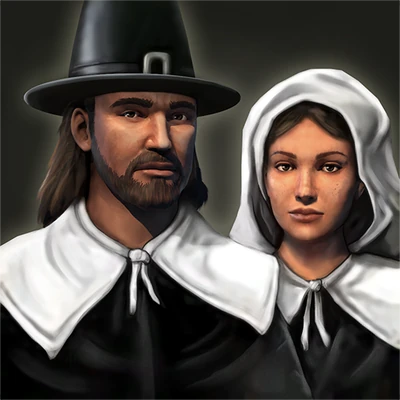
Pilgrim is economic unit in Age of Empires III, available from the Exploration Age. Its listed ability is Gathers resources; Builds buildings; Claims treasures.
Recorded values
- Cost
- 110 Food
- Available
- Exploration Age
- Training
- 27.5 sec · 1 population · 11 XP per train
- Durability & mobility
- 180 hit points · 20% hand resistance · 4.0 speed · 14 line of sight
- Hand attack
- 10 damage · 1.5 attack interval · bonuses: 5.0x vs. Llama, 16
- Ranged attack
- 3 damage · 2-12 range · 3.0 attack interval · bonuses: 4.0x vs. Huntable; 2.0x vs. Pet; 2.0x vs. Artillery; 0.5x vs. Villager
- Siege attack
- 5 damage · 3.0 attack interval · bonuses: 3.0x vs. Resource enclosure
- Ability
- Gathers resources; Builds buildings; Claims treasures
Role, availability & values
It has 180 hit points. It moves at 4.0 speed and uses 1 population. Training costs 110 Food; it takes 27.5 seconds to train. Attack profile: Hand attack deals 10 damage. Ranged attack deals 3 damage. Siege attack deals 5 damage. Hand attack bonuses: 5.0× against Llama, 16. Ranged attack bonuses: 4.0× against Huntable, 2.0× against Pet, 2.0× against Artillery, and 0.5× against Villager. Siege attack bonuses: 3.0× against Resource enclosure. Special ability or role: Gathers resources; Builds buildings; Claims treasures.
Matchup & timing
Use the Pilgrim as an economic worker: its 180 hit points give it more durability than many Settlers, but its one population and 110-Food cost still make losses expensive. Assign it to a safe gathering or construction task soon after it arrives, and confirm the scenario or civilization that provides it before treating it as a standard Town Center unit.
Economic profile and practical tasks
The Pilgrim is an Exploration Age economic unit introduced in The WarChiefs. It costs 110 Food, trains in 27.5 seconds, uses one population and has a creation limit shared with Settlers. Its 180 hit points and 20 percent hand resistance are higher than a standard Settler, while speed 4.0 and sight 14 support ordinary scouting and gathering. It can build most age-appropriate buildings, gather Food, Wood and Coin, unpack Home City resource deliveries and collect Treasures. The Plymouth map places Pilgrims in the opening setup, and the United States can ship them with Plymouth Settlers. Pilgrims build ordinary structures 10 percent faster than Settlers, and Houses, Churches and Manor Houses 20 percent faster. This makes them useful when early construction time matters, but their higher Food cost and shared Settler limit should be included in the economic plan. Their extra durability can help an Explorer clear animal treasure guardians, yet they remain workers rather than military units. Weak Infantry or Cavalry may be manageable in a group, but dedicated troops and raiders can still destroy them. Keep them working near protected resources and retreat them before an attack reaches the economy.
Gathering rates and resource choice
Pilgrim gathering depends strongly on the source. The recorded Food rates are 2.2 per second from a herded animal, 0.88 from hunted animals, 0.7 from Berry Bushes or Mills, 0.69 from Cherry Orchards, 0.55 from Farms, Rice Paddies or Fields, and 0.5 from Haciendas. Wood gathering is 0.55 per second from Trees and Mango Groves, 0.5 from Haciendas and 0.37 from Fields. Coin is 0.65 per second from Mines, Tribal Marketplaces or Mountain Monasteries, 0.55 from Estates and 0.37 from Rice Paddies or Fields. Crates are gathered at 10 resources per second; the special Crate of Surströmming is 9.6 Food per second. Those figures are source-specific listed rates and do not include civilization or technology bonuses. They make the general resource rule clear: natural sources such as hunts, trees and mines usually gather faster than permanent economic buildings. Transition to Mills, Farms, Estates or other infinite sources when the map resource is depleted or unsafe, and research the matching gathering upgrades if the economy will use those buildings for a long time. A Pilgrim can work every ordinary resource type, so assign it according to the current bottleneck rather than leaving a durable worker idle.
Survival and early military pressure
Pilgrims have enough extra hit points to survive some early exchanges better than Settlers, and their 20 percent hand resistance is useful against melee treasure guardians. Their ranged attack is only three damage, although it gains four times damage against Huntable animals, twice against Pets and Artillery, and half damage against Villagers. The unit should not be ordered to fight a real army. A group can finish weak targets or defend itself while an Explorer controls a treasure encounter, but dedicated infantry, cavalry and especially Oprichniks are dangerous. The hand attack also gains five times damage against Llamas, a specialized interaction rather than a general combat bonus. Because Pilgrims count against the Settler creation limit, an increased Pilgrim count can occupy space that might otherwise be used for Settler production. This shared cap is important when planning shipments: value the extra construction speed and durability against the economic delay. Keep the workers spread across useful tasks, use their faster building rate on time-sensitive structures, and move them away from exposed areas before committing to an age-up or military response.
Use gathering upgrades by resource source
Pilgrims count as ordinary gatherers for many civilization and Home City improvements. Natural-source bonuses affect hunts, trees and mines, while agricultural bonuses apply to Mills, Farms, Estates, Rice Paddies, Fields and Haciendas. Hunting Dogs and Steel Traps improve hunting for civilizations with access; Seed Drill, Artificial Fertilizer and Large Scale Agriculture affect farm-like production. Asian Civil Servants and Imperial Bureaucracy improve natural resources, while some Native American ceremonies provide Food gathering bonuses. The exact card set depends on the civilization, so do not assume every listed improvement applies to Plymouth or to a United States shipment. If the Pilgrim is only gathering for a short opening, a costly late research may not repay itself. If many Pilgrims remain on Mills or Estates for the rest of the match, a matching upgrade can compound over time. Assign the fastest available resource source first, then transition to sustainable buildings as the map resources run low.
Plymouth map and United States shipment
The Pilgrim is not a standard trainable civilization roster unit. Its distinctive appearance and opening table scene belong to the Plymouth map setup; the United States can also receive Pilgrims through the Plymouth Settlers Home City card. The card route gives access outside the map start, but the unit still consumes one population and counts toward the Settler creation limit. A shipment should be valued for both the worker count and the arrival timing. The extra hit points make the unit safer against a small early raid, and faster construction helps establish buildings, but the 110 Food cost is substantially different from receiving a free map start. The Pilgrim does not make a separate economic cap or replace all ordinary Settlers. Keep the map-specific start separate from campaign and standard skirmish access when describing a build order.
Build orders and worker assignments
The Pilgrim is most useful early, when its construction speed can bring an Outpost, House or production building online before an opponent timing arrives. After construction, return the unit to gathering so its faster work rate continues to repay the Food investment. Keep a balanced workforce: hunt and herd for fast Food while the route is safe, assign Wood for houses and military buildings, and add Coin when the next age or unit composition requires it. As natural sources are depleted, move workers to the appropriate infinite building. A Pilgrim can also unpack a resource shipment quickly at its arrival point, because crate gathering has a listed rate of 10 per second. Do not send it to a distant treasure if an ordinary Explorer can do the job; use its extra durability when the guardian is a threat and the worker can return safely. The unit is strongest as an economic specialist that occasionally survives pressure, not as an early skirmisher.
Costs, population and the Settler limit
At 110 Food and one population, each Pilgrim uses the same population slot as a Settler but costs more Food. The creation limit is shared with Settlers, so map-start Pilgrims or a shipment may reduce the room available for later ordinary worker production. Plan the workforce before sending Plymouth Settlers, especially if the colony already approaches the cap. The 180 hit points and 20 percent hand resistance provide more protection than a normal worker, but do not change the economic unit classification or its vulnerability to military counters. If the Plymouth start grants workers without a direct queue cost, use them efficiently; the United States shipment route has a card and opportunity cost. Construction bonuses also vary by building: most receive ten percent faster construction, while Houses, Churches and Manor Houses receive twenty percent. Apply the correct bonus rather than treating every build as twice as fast.
Plymouth opening priorities
On Plymouth, the placed Pilgrims provide immediate working capacity, so assign them before moving the Explorer far from the starting area. Build the first required structures with the units that receive the construction bonus, unpack nearby crates quickly and keep workers on hunts while guardians are manageable. Use the additional durability for safe treasure support, not for a speculative fight. If a shipment supplies Pilgrims later, treat it as worker growth and account for the Settler limit before choosing it.
Scenario worker and Plymouth map unit
The Pilgrim is a WarChiefs-era economic unit found on the Plymouth map and in related scenario or shipment content. It costs 110 Food, trains in 27.5 seconds and uses one population. Its profile has 180 hit points, 20% hand resistance, speed four and sight 14. Like a Settler, it gathers resources, builds buildings and claims Treasures. Its unusual access means the Pilgrim should not be treated as a standard trainable worker for every civilization or map. The Plymouth scenario includes Pilgrims alongside an Intrepid Turkey Scout, while the United States can access them through the Plymouth Settlers Home City Card. The unit’s stronger health and resistance can help it survive incidental danger, but its primary purpose remains economic work.
Gathering and scenario decisions
In missions that provide Pilgrims, assign them to the resource required by the next objective and protect them as the economy expands. Their attack is not designed for direct fighting: the ranged profile is weak against Villagers, while its bonuses against huntables, pets and artillery reflect a limited set of target interactions. A Pilgrim can collect Treasures after Guardians are handled, adding resources or experience to a scenario economy. If the map or card does not grant them, do not plan on producing them from an ordinary Town Center. Keep their campaign and shipment access distinct from the standard Settler roster, and use the mission’s actual objectives to decide whether building, gathering or Treasure collection is the best immediate task.
Turn the gathering profile into a resource rotation
The listed rates show why a Pilgrim's assignment should follow the resource that is both safe and efficient. A herded animal is the fastest Food source at 2.2 per second, compared with 0.88 from a hunted animal and about 0.7 from a Berry Bush or Mill; the difference is useful only while the animal can be kept near the workers and the route is protected. Crates gather at 10 resources per second, so a Pilgrim can clear a delivered crate quickly and return to a longer gathering task. Mines provide 0.65 Coin per second in the recorded profile, while Estates provide 0.55; the renewable source is a later substitute when deposits run low, not necessarily the fastest opening choice. Recheck the route as the hunt moves or disappears, and shift workers before they idle at an empty source. The Pilgrim's broad gathering ability makes it flexible, but does not remove the need to match the task to the economy's next cost.
Historical identity and in-game presentation
The Pilgrim's presentation refers to the English Puritan settlers associated with the Mayflower's 1620 arrival in Massachusetts. In-game, the unit is used on the Plymouth map and can also be received through the United States Plymouth Settlers Home City Card; it is not a universal worker option for every Town Center. Outside the British civilization, Pilgrims speak the language of the civilization that owns them. Keep the historical theme, map-start role and card-based access distinct when describing where the unit appears.